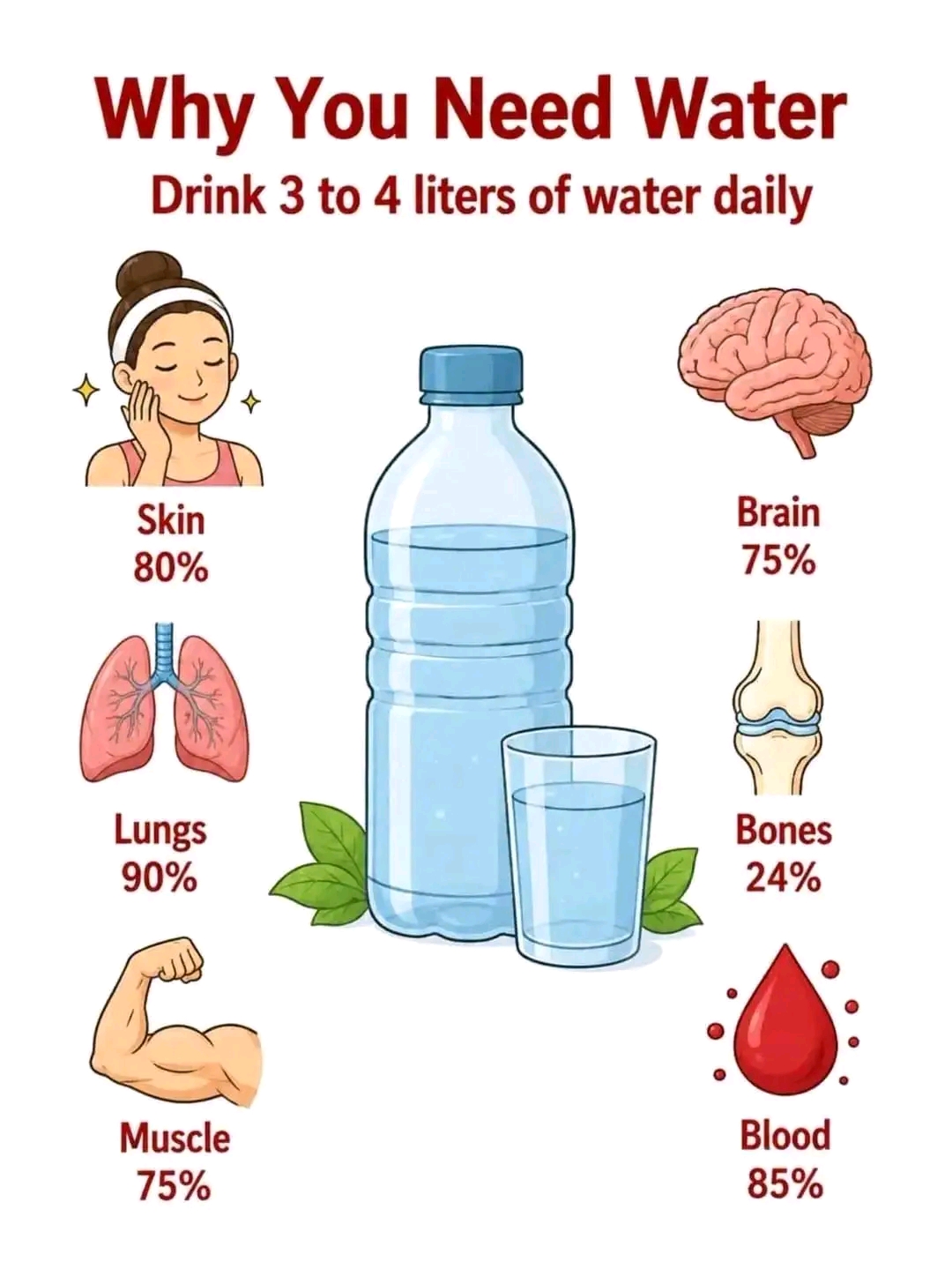
💧 Why You Need Water: The Essential Drink for Life
Introduction
Water is one of the most important things your body needs every day. Your body uses water for almost every major function—from regulating temperature and transporting nutrients to helping digestion and removing waste.
Unlike many foods and drinks, water has no added sugar, no fat, and no calories, making it a simple and essential choice for everyday hydration.
🥤 The “Recipe” for Daily Hydration
Ingredients
- 💧 Clean drinking water
- 🍋 Lemon or lime slices, optional
- 🥒 Cucumber slices, optional
- 🌿 Fresh mint, optional
- 🍓 Fresh berries, optional
- 🧊 Ice cubes, optional
Equipment
- 1 large reusable bottle or glass
- A refrigerator, if you prefer chilled water
Instructions
Method 1: Simple Hydration
- Fill your bottle or glass with clean drinking water.
- Drink regularly throughout the day rather than waiting until you are extremely thirsty.
- Keep water available when working, studying, exercising, or traveling.
- Increase your fluid intake when you lose more water through sweating, hot weather, or physical activity.
Method 2: Naturally Flavored Water
- Fill a large jug with drinking water.
- Add a few slices of lemon, cucumber, orange, or a handful of berries.
- Add fresh mint if desired.
- Refrigerate for about 1–2 hours.
- Serve over ice.
This can make plain water more enjoyable without needing to add much sugar.
🌊 Why Does Your Body Need Water?
1. It supports temperature regulation
Your body uses water and sweating to help regulate its temperature, especially during hot weather or exercise.
2. It helps digestion
Water contributes to normal digestion and helps keep stool softer, supporting regular bowel movements.
3. It transports important substances
Blood contains a large amount of water. Adequate hydration helps your body transport nutrients and other substances throughout the body.
4. It helps remove waste
Your kidneys use water to produce urine and eliminate waste products from the body.
5. It supports joints and tissues
Water is an important component of many body tissues and contributes to normal lubrication and cushioning.
6. It supports physical performance
Even relatively small amounts of fluid loss can make exercise feel more difficult. Replacing fluids lost through sweating is particularly important during prolonged or intense activity.
7. It supports normal brain function
Dehydration can contribute to symptoms such as headache, tiredness, dizziness, and difficulty concentrating.
🕰️ A Brief History of Water and Hydration
Water has always been fundamental to human civilization. Ancient communities settled near rivers, springs, lakes, and other dependable sources of fresh water.
As cities developed, people created wells, cisterns, aqueducts, canals, and other systems to collect and transport water. Ancient civilizations such as the Romans became famous for their large aqueduct networks.
Modern societies eventually developed extensive water-treatment and distribution systems, allowing millions of people to access treated drinking water through household taps.
Today, hydration remains just as important as it was thousands of years ago—the difference is that many people can obtain safe drinking water much more conveniently.
💧 How Water Is Formed
Water is a chemical compound made from two hydrogen atoms and one oxygen atom, written as H₂O.
Water naturally exists in three familiar states:
- 🧊 Solid: ice
- 💧 Liquid: drinking water, rivers, lakes, and oceans
- ☁️ Gas: water vapor
Through the water cycle, water continuously moves between the atmosphere, land, oceans, and living organisms through evaporation, condensation, precipitation, and collection.
⏰ When Should You Drink Water?
There is no single amount that is perfect for every person. Fluid needs vary according to factors such as body size, activity, climate, diet, pregnancy, illness, and other circumstances.
Good times to pay attention to hydration include:
- After waking up
- With meals
- During physical activity
- After sweating heavily
- During hot weather
- When traveling
- Whenever you feel thirsty
Your urine color can also provide a rough indication of hydration. Pale-yellow urine generally suggests adequate hydration, while very dark urine can be a sign that you may need more fluids.
⚠️ Can You Drink Too Much Water?
Yes. More water is not always better. Drinking extremely large amounts of water in a short period can dangerously dilute the sodium concentration in the blood, a condition called hyponatremia.
The goal is balanced hydration, not forcing yourself to drink excessive quantities.
❤️ Who Will Love This “Recipe”?
This simple hydration routine is especially useful for:
- 💦 People who often forget to drink water
- 🏃 People who exercise regularly
- ☀️ People living in hot climates
- 🧑💻 People who spend long hours working or studying
- 🚶 People who are frequently active
- 🍋 Anyone who enjoys naturally flavored water
🌿 Tips to Make Water More Enjoyable
If you don’t like plain water, try:
Lemon + Mint: refreshing and bright.
Cucumber + Lime: light and crisp.
Strawberry + Mint: fruity without needing a sugary drink.
Orange + Ginger: fresh and aromatic.
Watermelon + Mint: excellent when served chilled.
These additions can make water more appealing while keeping the drink simple.
Conclusion
Water isn’t a magic cure or a special detox drink—it is something much more fundamental: an essential nutrient your body needs to function normally.
Instead of waiting until you’re very thirsty, make drinking water a regular part of your day. Keep a bottle nearby, drink with meals, replace fluids after sweating, and choose water instead of sugary drinks when possible.
💙 Final Reminder
Drink regularly. Stay balanced. Listen to your body. Make water your everyday friend. 💧