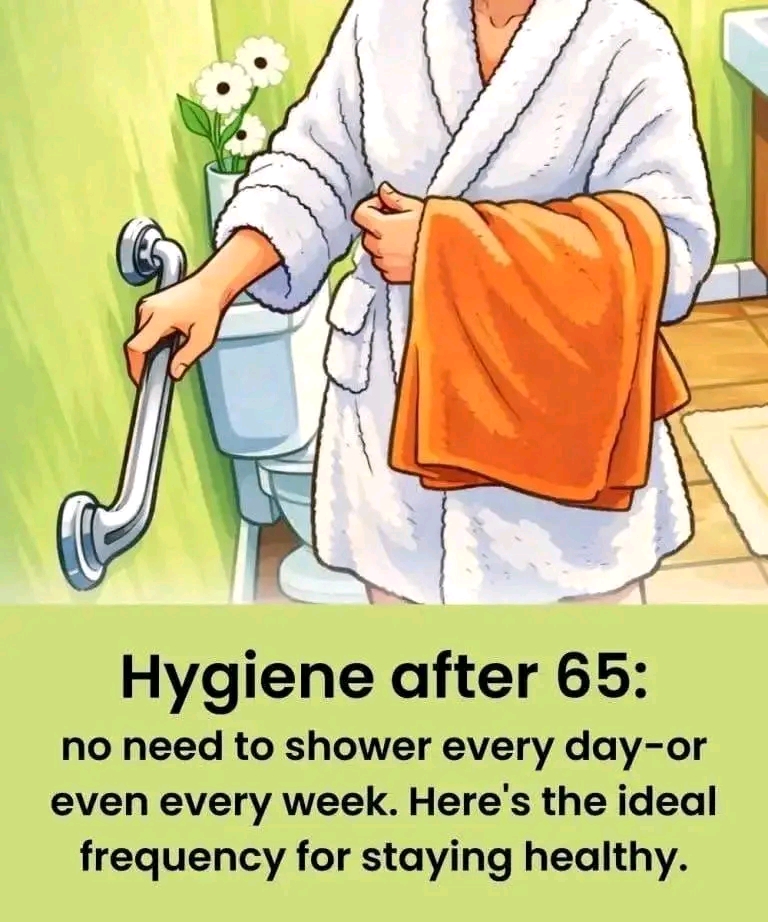
Why Daily Showers After 65 May Do More Harm Than Good
🌿 Introduction
After 65, your skin deserves a gentler routine. The skin’s natural protective barrier can become more fragile with age, so habits that once caused no problems may leave the skin dry, itchy, tight, or irritated.
This does not mean that older adults should stop showering. Regular washing remains important for cleanliness and comfort. Instead, the goal is to find a balanced bathing routine that keeps the body clean without unnecessarily stripping the skin’s natural oils.
A simple rule is:
Clean gently, keep showers short, avoid very hot water, and moisturize afterward.
🧴 The “Ingredients” for Healthy Bathing After 65
Think of these as the ingredients in your daily skin-care recipe:
- 🚿 Warm—not hot—water
- 🧼 Gentle, fragrance-free cleanser
- 🧴 Fragrance-free moisturizing cream or ointment
- 🧽 A soft cloth, if needed
- 🧻 A clean, soft towel
- 🪑 Shower chair if standing is difficult or tiring
- 🛁 Non-slip shower or bath surface
- 💧 Adequate fluids throughout the day, unless a healthcare professional has advised fluid restriction
Dermatologists recommend fragrance-free products because fragrances can irritate dry or sensitive skin.
🚿 Instructions: The Gentle Shower Method
Step 1 — Prepare the bathroom
Before getting into the shower, make sure the floor is safe and that everything you need is within easy reach.
For someone who has balance problems, grab bars, nonslip surfaces, and a shower chair can make bathing safer.
Step 2 — Use warm water
Avoid extremely hot showers.
Hot water can remove natural oils from the skin and increase dryness. Warm water is usually a better choice for mature skin.
Step 3 — Keep it short
Aim for approximately 5–10 minutes rather than spending a long time under running water.
Short showers are specifically recommended by dermatologists for people dealing with dry skin.
Step 4 — Clean strategically
You don’t necessarily need to aggressively soap every inch of your body every day.
Use a gentle cleanser particularly where sweat, odor, and dirt accumulate, such as the armpits and groin. Avoid vigorous scrubbing.
Step 5 — Rinse gently
Make sure cleanser is removed without rubbing the skin harshly.
Step 6 — Pat dry
Don’t vigorously rub the towel against your skin.
Instead, gently pat yourself dry while leaving a little moisture on the skin.
Step 7 — Moisturize immediately
This is one of the most important steps.
Apply a fragrance-free cream or ointment while the skin is still slightly damp. Dermatologists recommend moisturizing within a few minutes after bathing to help retain moisture.
🕰️ Why Skin Changes After 65
As we age, skin can become:
- Drier
- Thinner
- More easily irritated
- Itchier
- More vulnerable to cracking
- Slower to heal
The American Academy of Dermatology specifically notes that skin in the 60s and 70s can lose water more easily and become increasingly dry and sensitive.
This is why a shower routine that involves very hot water + long exposure + harsh soap + vigorous scrubbing can be particularly uncomfortable.
⚠️ What Can Make Daily Showering Problematic?
The problem isn’t simply the word “daily.”
The bigger concerns are:
🔥 1. Very hot water
Hot water can strip natural oils and worsen dryness.
⏰ 2. Long showers
Spending a long time bathing can aggravate dry skin. Dermatologists recommend keeping showers short.
🧼 3. Harsh soaps
Strongly fragranced or deodorizing soaps can irritate dry, sensitive skin.
🧽 4. Aggressive scrubbing
Loofahs, rough brushes, and vigorous washcloth use may irritate fragile skin.
🧴 5. Forgetting moisturizer
Bathing without moisturizing afterward can leave already-dry skin feeling tight and uncomfortable.
❤️ Who Will Love This Gentler Method?
This routine may be especially useful for:
- ❤️ Adults over 65 with dry skin
- ❤️ People whose skin becomes itchy after showering
- ❤️ Anyone with sensitive skin
- ❤️ People who dislike the tight feeling after a hot shower
- ❤️ Caregivers helping older family members
- ❤️ Anyone living in a dry or cold environment
But everyone’s bathing needs are different. Someone who sweats heavily, exercises frequently, works in a dirty environment, or has certain medical or skin conditions may need a different routine.
🧼 What About Washing Less Often?
There is no universal rule saying everyone over 65 should shower only a certain number of times per week.
The AAD says that some people in their 60s and 70s may not need to bathe every day, particularly when dryness is a problem.
The best routine depends on:
- Activity level
- Sweating
- Climate
- Skin condition
- Personal preference
- Medical conditions
- Incontinence or other hygiene needs
The goal isn’t to avoid bathing. The goal is healthy, comfortable skin.
🌸 A Simple Daily Skin-Care Formula
Think of the routine like a recipe:
Warm water
➕ Short shower
➕ Gentle cleanser
➕ No aggressive scrubbing
➕ Pat dry
➕ Moisturizer on damp skin
= A kinder bathing routine for mature skin
📜 History and Formation
For much of human history, bathing habits varied enormously depending on climate, culture, access to water, and available facilities. Modern homes with hot running water made frequent showering much easier and turned daily showers into a common habit.
But the skin itself still has its own biology.
The outer layer acts as a protective barrier. Natural oils help reduce water loss and protect the skin. With aging, the skin can become drier and more fragile, so modern convenience doesn’t necessarily mean that more water, more soap, and more scrubbing are always better.
Modern dermatology therefore focuses less on simply asking “How often should I shower?” and more on how to protect the skin while maintaining good hygiene.
🌿 The Gentle Bathing Method
If a full shower every day leaves your skin extremely dry, you can discuss adjusting your routine with your healthcare professional.
On days when a full shower isn’t necessary, you can still maintain hygiene by washing areas that become sweaty or dirty.
However, special circumstances—such as incontinence—may require more frequent cleansing to prevent irritation and infection.
🚨 When Dry Skin Needs Medical Attention
Don’t assume persistent itching is simply “normal aging.”
See a healthcare professional or dermatologist if you develop:
- Severe or persistent itching
- Cracked or bleeding skin
- Painful rashes
- Sores that don’t heal
- Signs of infection
- Severe dryness that doesn’t improve with gentle skin care
Persistent excessive dryness can sometimes be associated with underlying medical conditions, so professional evaluation may be appropriate.
💧 Final Conclusion
Daily showers after 65 are not automatically bad. What can cause trouble is a bathing routine that repeatedly exposes mature skin to very hot water, long showers, harsh cleansers, and aggressive scrubbing.
A better approach is simple:
Keep it warm. Keep it short. Clean gently. Pat dry. Moisturize immediately.
And remember: there is no magic “65+ shower rule.” Your personal hygiene needs, activity, climate, skin condition, and medical situation all matter.
Your skin has protected you for decades. After 65, giving it a little extra gentleness may be one of the simplest ways to keep it comfortable and healthy. ❤️