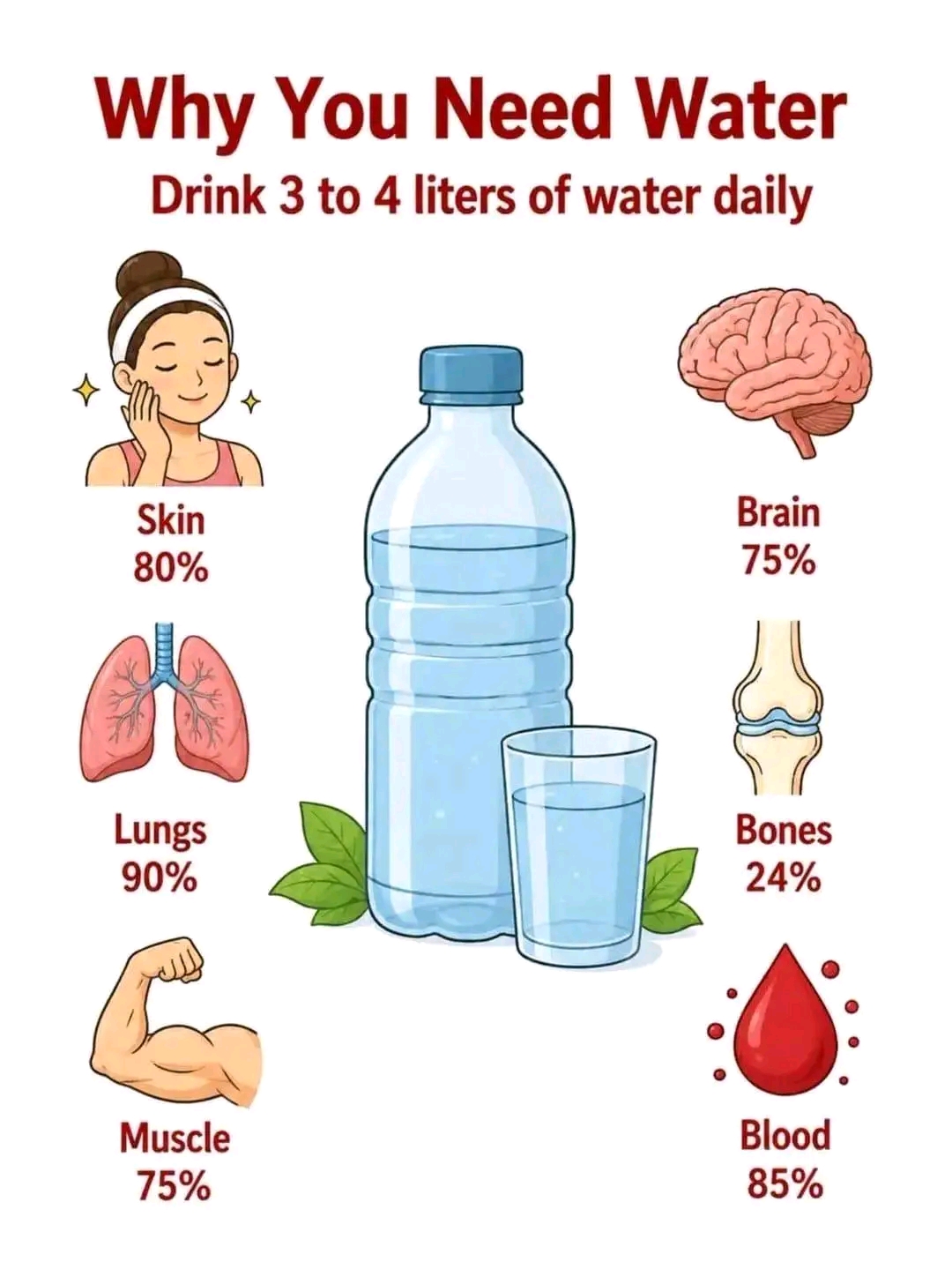
💧 Why Do We Need Water? — A Complete Guide
Introduction
Water is one of the most important substances our bodies need. Every cell, tissue, and organ depends on water to function properly. We lose water throughout the day through breathing, sweating, urination, and bowel movements, so we need to replace it regularly.
Water isn’t just something that stops thirst—it helps the body regulate temperature, transport nutrients, remove waste, lubricate joints, and support normal digestion.
🧾 Ingredients for a Healthy Hydration Routine
- 💧 Clean drinking water
- 🍋 Lemon or lime slices, optional
- 🥒 Cucumber slices, optional
- 🌿 Fresh mint, optional
- 🍓 Fresh berries, optional
- 🥥 Unsweetened coconut water, occasionally
- 🍲 Water-rich foods such as watermelon, oranges, cucumber, tomatoes, soups, and yogurt
🥤 Simple Hydration Recipe
Ingredients
- 1 liter of cool or room-temperature water
- 3–4 slices of lemon
- 3–4 cucumber slices
- A few fresh mint leaves
- A small handful of berries
Instructions
- Wash the fruits, cucumber, and mint thoroughly.
- Slice the lemon and cucumber.
- Add everything to a large pitcher.
- Pour in 1 liter of water.
- Refrigerate for 30–60 minutes if you enjoy it chilled.
- Pour into a glass and drink throughout the day.
- Refill with plain water as needed.
Important: The flavored ingredients are mainly for taste. You don’t need lemon, cucumber, or special ingredients to hydrate—plain water works perfectly.
🔬 Method: What Water Does in the Body
1. Regulates body temperature
When your body becomes hot, sweating helps release heat. Water is essential for producing sweat and maintaining temperature.
2. Supports digestion
Water helps keep food moving through the digestive system and contributes to normal bowel function.
3. Helps transport nutrients
Blood contains a large amount of water, allowing nutrients and other substances to circulate throughout the body.
4. Helps remove waste
The kidneys use water to produce urine and eliminate waste products from the body.
5. Lubricates tissues
Water contributes to the fluids that help lubricate joints and protect sensitive tissues.
6. Supports physical performance
Losing too much water through sweat can contribute to fatigue and reduced physical performance.
7. Supports concentration and alertness
Even relatively small fluid losses can make some people feel tired or less focused.
📜 A Little History
Humans have always depended on reliable sources of water. Ancient civilizations developed wells, cisterns, canals, aqueducts, and other systems to collect and transport water.
As societies grew, clean water became increasingly important for preventing waterborne diseases. Modern water-treatment and sanitation systems have dramatically improved public health in many parts of the world.
🧬 Formation and Distribution of Water
Water is made from two hydrogen atoms and one oxygen atom (H₂O). On Earth, it exists naturally as:
- 💧 Liquid water
- 🧊 Ice
- ☁️ Water vapor
The water cycle continuously moves water through evaporation, condensation, precipitation, groundwater, rivers, lakes, and oceans.
❤️ Water Lovers: Foods That Help With Hydration
If you’re not a big fan of drinking plain water, water-rich foods can contribute to your daily fluid intake:
- Watermelon
- Cucumber
- Strawberries
- Oranges
- Grapefruit
- Tomatoes
- Lettuce
- Soups and broths
- Plain yogurt
Tea and other beverages can also contribute to fluid intake, although drinks high in added sugar are best limited.
⏰ Best Method for Drinking Water
Instead of trying to drink a huge amount at once, make hydration a regular habit:
Morning: Have some water after waking.
During meals: Drink according to thirst.
During exercise: Drink regularly, especially in hot weather.
After sweating: Replace lost fluids.
Throughout the day: Keep water accessible and drink when thirsty.
Your needs vary according to factors such as body size, activity, climate, diet, and illness. There isn’t one exact amount that everyone must drink.
⚠️ Don’t Overdo It
More water isn’t always better. Drinking an excessive amount in a short period can dangerously dilute the sodium concentration in the blood. Let thirst and your body’s needs guide you, rather than forcing enormous quantities.
Conclusion
Water is a simple but essential part of a healthy life. It helps regulate temperature, supports digestion and circulation, assists the kidneys in removing waste, and keeps many tissues functioning normally.
The best “water recipe” is often the simplest one: drink safe, clean water regularly and eat plenty of water-rich foods. 💧