The Hidden Meaning Behind One of History’s Oldest Hand Gestures
Introduction
Throughout human history, people have communicated not only with words, but also with their hands. Long before modern languages, written messages, and social media, a simple movement of the fingers could express welcome, warning, friendship, respect, challenge, or even protection.
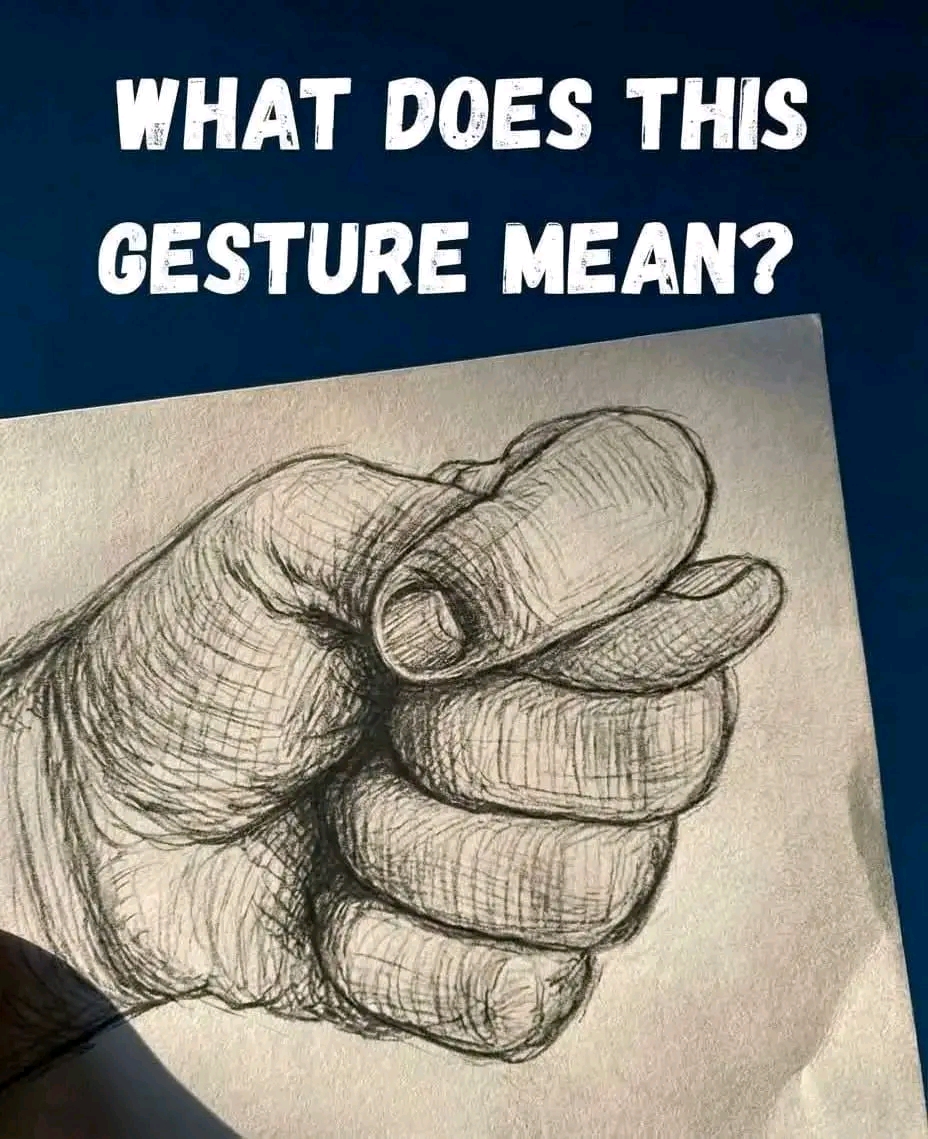
One of the most fascinating examples is the “fig sign” or fig gesture—a hand gesture formed by placing the thumb between two fingers. Today, it may be interpreted differently depending on the country and context, but versions of this gesture have appeared in ancient Mediterranean cultures and later traditions.
Unlike a recipe, this story has no kitchen ingredients. Instead, its “ingredients” are history, culture, symbolism, tradition, and human communication.
Ingredients of the Story
- 1 ancient hand gesture
- Thousands of years of human history
- Ancient Mediterranean traditions
- A generous portion of folklore
- Cultural symbolism
- Changing meanings across centuries
- A little mystery
- Different interpretations from different societies
- Curiosity and imagination
History
The fig gesture is often associated with ancient Mediterranean cultures. The gesture is commonly known as the mano fico, or “fig hand,” because the thumb appears between the curled fingers, resembling a fig.
In some ancient contexts, the gesture was associated with fertility, sexuality, protection, or warding off evil. Its exact meaning was not necessarily identical everywhere, and historical interpretations can vary.
The fig itself carried symbolic importance in the ancient Mediterranean world. Fig trees were valued for their fruit and were connected with fertility and abundance. Because of this, the hand gesture may have acquired symbolic meanings connected with reproduction and protection.
Over time, the gesture traveled through cultures and languages. Like many old symbols, its meaning changed. A gesture that might once have been protective or symbolic could eventually become rude or insulting in another society.
Formation of the Gesture
The traditional fig gesture is formed by:
- Curling the index and middle fingers toward the palm.
- Curling the ring and little fingers around the thumb.
- Placing the thumb between the index and middle fingers.
- Holding the hand in front of you.
The result resembles a small “fig,” which explains its traditional name.
However, the meaning depends heavily on cultural context. Hand gestures should never be interpreted universally because the same movement can have completely different meanings in different countries.
The Hidden Meaning
The fascinating part of the fig gesture is that it appears to have carried several symbolic associations.
1. Protection
In some traditions, the gesture was believed to have protective significance. Like other ancient signs and amulets, it could be used symbolically against misfortune or the “evil eye.”
2. Fertility
The connection with the fig and its shape contributed to associations with fertility and reproduction.
3. Sexual symbolism
The gesture has also been interpreted as having sexual symbolism. Ancient cultures frequently used symbolic representations of fertility and sexuality in art, religion, jewelry, and everyday objects.
4. Insult
In later European traditions, particularly in some Mediterranean cultures, the gesture could become vulgar or insulting.
This transformation is one of the most interesting aspects of the gesture’s history: the physical gesture remained relatively similar while its social meaning changed.
Method: How Symbols Change
Think of cultural symbolism as a recipe passed from one generation to another.
The basic “ingredient”—the hand gesture—remains recognizable, but each generation can add its own interpretation.
Ancient symbolism → folklore → religious traditions → regional customs → modern interpretation
As people migrate, trade, conquer territories, marry across cultures, and exchange ideas, symbols travel with them.
Sometimes their original meaning survives.
Sometimes it disappears.
Sometimes the symbol acquires an entirely new meaning.
Lovers of Ancient Symbols
History lovers are fascinated by gestures like this because they reveal something important about ordinary people.
A monument tells us what rulers wanted remembered.
A written law tells us what governments wanted controlled.
But a simple hand gesture can reveal how ordinary people communicated with one another.
It is a tiny piece of history carried by the human body.
A Gesture Without Words
Imagine living thousands of years ago.
There is no smartphone.
No text message.
No emoji.
No internet.
You meet someone from another village. You may not speak the same language, but you can still communicate with your hands.
A raised hand can mean “stop.”
A wave can mean “hello” or “goodbye.”
A finger can point toward something important.
A particular gesture can carry a cultural message that everyone in your community understands.
In this sense, ancient gestures were almost like the emojis of the ancient world—although their meanings were much more dependent on local traditions.
Method of Understanding Historical Gestures
When studying an ancient gesture, it is important not to assume that one modern interpretation explains its entire history.
Instead, historians consider:
- Archaeological evidence
- Ancient artwork
- Written descriptions
- Religious traditions
- Linguistic evidence
- Regional customs
- Comparisons with related symbols
- How the gesture was used in different periods
This prevents us from turning an interesting historical symbol into a simple myth.
Why the Gesture Survived
The human hand is one of the most powerful communication tools we possess.
Words disappear when languages change.
Written languages can become difficult to understand.
But gestures can survive because they are physical.
A grandmother can teach a child a gesture without explaining its entire history.
A traveler can carry a gesture from one country to another.
A community can preserve a symbolic movement for centuries.
That may be one reason ancient gestures continue to appear in modern culture.
A Symbol With Many Faces
The most important lesson is that there isn’t necessarily one universal hidden meaning.
The same gesture can represent:
- Protection in one tradition
- Fertility in another
- A vulgar expression somewhere else
- A playful sign in another setting
- Simply an unfamiliar hand movement to someone who doesn’t know its cultural history
That is why cultural awareness matters.
Before using an unfamiliar gesture, especially while traveling, it is wise to understand how local people interpret it.
Conclusion
The story of the fig gesture is much more than the story of a hand position.
It is a story about human imagination, cultural change, communication, and memory.
A simple arrangement of five fingers can preserve traces of beliefs that existed thousands of years ago. Its meaning may have changed dramatically over time, but the gesture reminds us that humans have always searched for ways to communicate ideas that words cannot easily express.
The next time you see an ancient hand gesture in a painting, sculpture, photograph, or historical artifact, remember that you may be looking at more than a movement of the hand.
You may be looking at a piece of cultural history passed from generation to generation.
For History Lovers ❤️
If you love mysterious traditions, forgotten customs, and fascinating pieces of ancient history, this is exactly the kind of small detail worth exploring. Sometimes the most interesting stories of the past aren’t hidden inside enormous monuments—they’re hidden in the everyday gestures people made with their own hands.
History leaves clues everywhere. Sometimes, those clues are right in the palm of your hand.