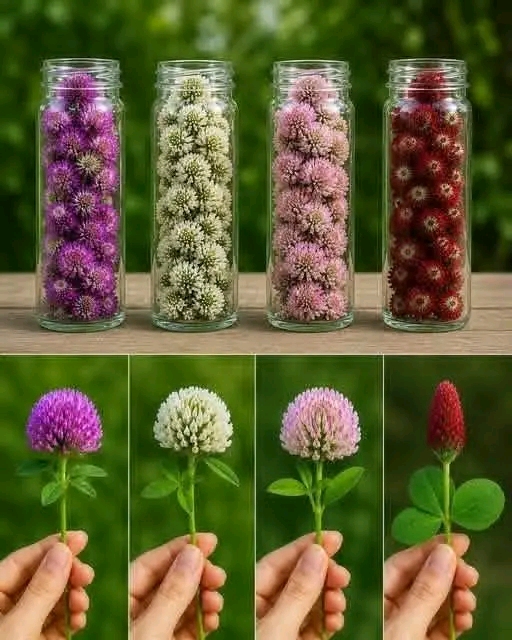
🍀 The Hidden Power of Clovers: A Beautiful Clover-Inspired Recipe
Important: Not every clover growing outdoors is safe to eat. For this recipe, use only culinary-grade edible flowers or clover that has been positively identified as food-safe and grown without pesticides.
🍀 Ingredients
For the salad
- 4 cups mixed salad greens
- 1 cup baby spinach
- 1 crisp apple, thinly sliced
- ½ cup walnuts, lightly toasted
- ½ cup crumbled goat cheese or feta
- ¼ cup dried cranberries
- ¼ cup edible clover blossoms, thoroughly washed
- 2 tablespoons fresh parsley, chopped
- 1 tablespoon fresh mint, chopped
For the honey dressing
- 3 tablespoons extra-virgin olive oil
- 1½ tablespoons honey
- 1 tablespoon fresh lemon juice
- 1 teaspoon Dijon mustard
- ½ teaspoon apple cider vinegar
- ¼ teaspoon garlic powder
- Salt, to taste
- Freshly ground black pepper, to taste
Optional additions
- Cucumber slices
- Pomegranate seeds
- Sunflower seeds
- Roasted chickpeas
- Grilled chicken
- A few thin slices of pear
🌿 Introduction
There is something wonderfully humble about a clover. It grows close to the ground, survives in many conditions, and provides an important source of nourishment for pollinators.
The familiar three-leaf clover has also become associated with luck, while the rare four-leaf variety has traditionally been considered a symbol of good fortune.
This recipe celebrates that natural charm without pretending that clover itself is a miracle ingredient. Instead, it brings together fresh greens, fruit, nuts, cheese, herbs, and honey to create a colorful dish inspired by the beauty of the meadow.
🥗 Method 1: Prepare the Greens
Begin by washing the salad greens and spinach thoroughly.
Dry them well. A salad spinner works especially well because excess water can make the dressing slide off the leaves.
Place the greens in a large serving bowl.
Add the chopped parsley and mint.
Gently toss everything together.
🍎 Method 2: Add the Fresh Ingredients
Thinly slice the apple.
Add the apple slices to the greens along with the dried cranberries.
Scatter the toasted walnuts over the top.
Then crumble the goat cheese or feta across the salad.
Finally, carefully add the edible clover blossoms.
The flowers should be treated as a delicate garnish rather than the main ingredient.
🍯 Method 3: Make the Honey Dressing
In a small bowl, combine:
- Olive oil
- Honey
- Lemon juice
- Dijon mustard
- Apple cider vinegar
- Garlic powder
- Salt
- Black pepper
Whisk vigorously until the dressing becomes smooth and slightly creamy.
Taste it.
For more sweetness, add a little honey.
For more brightness, add another squeeze of lemon.
For more richness, add a small drizzle of olive oil.
🌸 Method 4: Bring Everything Together
Pour the dressing over the salad just before serving.
Do not add all the dressing at once. Start with about half, toss gently, and add more if necessary.
Use salad spoons or clean hands to lift and turn the ingredients rather than crushing them.
The goal is to coat the leaves lightly while keeping the apples crisp and the walnuts crunchy.
🔥 Method 5: Toast the Walnuts
For extra flavor, place the walnuts in a dry skillet over medium-low heat.
Toast them for approximately 3–5 minutes, stirring frequently.
Remove them as soon as they become fragrant.
Allow them to cool before adding them to the salad.
Be careful because nuts can burn quickly.
🍀 The History of Clover
Clover belongs to the genus Trifolium, a group of plants known for their characteristic three-part leaves.
For centuries, clovers have been associated with meadows, agriculture, grazing animals, and soil improvement.
One of their most interesting natural characteristics is their relationship with nitrogen-fixing bacteria living around their roots. This relationship allows clover to contribute nitrogen to soil, making clovers valuable plants in agriculture and ecological systems.
The four-leaf clover became especially famous as a symbol of luck because finding one is considerably less common than finding the ordinary three-leaf form.
So while clover may appear ordinary, its ecological role is anything but insignificant.
🌱 Formation and Natural Importance
Clover develops from a small seed into a low-growing herbaceous plant.
Its roots form relationships with bacteria that can convert atmospheric nitrogen into forms useful to plants.
Its flowers also provide nectar and pollen that can attract bees and other insects.
This makes clover more than just a decorative plant. It can be part of a healthy ecosystem and has historically been useful as forage and as part of agricultural systems.
❤️ Who Will Love This Recipe?
This salad is especially enjoyable for:
- 🥗 Salad lovers
- 🍎 Fans of sweet-and-savory combinations
- 🌿 People who enjoy fresh herbs
- 🧀 Goat cheese and feta lovers
- 🌰 Walnut lovers
- 🍯 Anyone who enjoys honey-based dressings
- 🌸 People who love beautiful, colorful dishes
- 👨👩👧👦 Families looking for an easy side dish
It also makes a lovely addition to a picnic, brunch, light lunch, or dinner table.
✨ Presentation Method
For a beautiful presentation, arrange the greens on a large platter instead of tossing everything in a deep bowl.
Place apple slices around the edges.
Sprinkle walnuts and cranberries across the center.
Add crumbled cheese.
Finish with the edible clover blossoms and a few mint leaves.
Drizzle the honey dressing lightly over the top.
The result is colorful, fresh, rustic, and naturally elegant.
🍽️ Serving Suggestions
Serve this salad alongside:
- Roasted chicken
- Grilled fish
- Baked salmon
- Vegetable soup
- Crusty bread
- Roasted potatoes
- Grilled vegetables
For a more substantial meal, add grilled chicken, chickpeas, or roasted beans.
💚 Conclusion
The hidden power of clovers isn’t that they are a magical cure or secret superfood. Their real wonder lies in their quiet role in nature.
They support pollinators, participate in soil ecosystems, provide useful forage, and have inspired symbols of luck for generations.
This clover-inspired salad captures that same spirit: simple ingredients brought together to create something beautiful.
A handful of greens, a crisp apple, toasted walnuts, creamy cheese, sweet cranberries, fragrant herbs, and a honey-lemon dressing can transform an ordinary meal into something special.
🍀 Sometimes the most unassuming things in nature have the most interesting stories.
If you love fresh, colorful recipes like this, save it, share it, and tell me: 🍀 Would you choose a three-leaf clover or keep searching for the lucky four-leaf one?