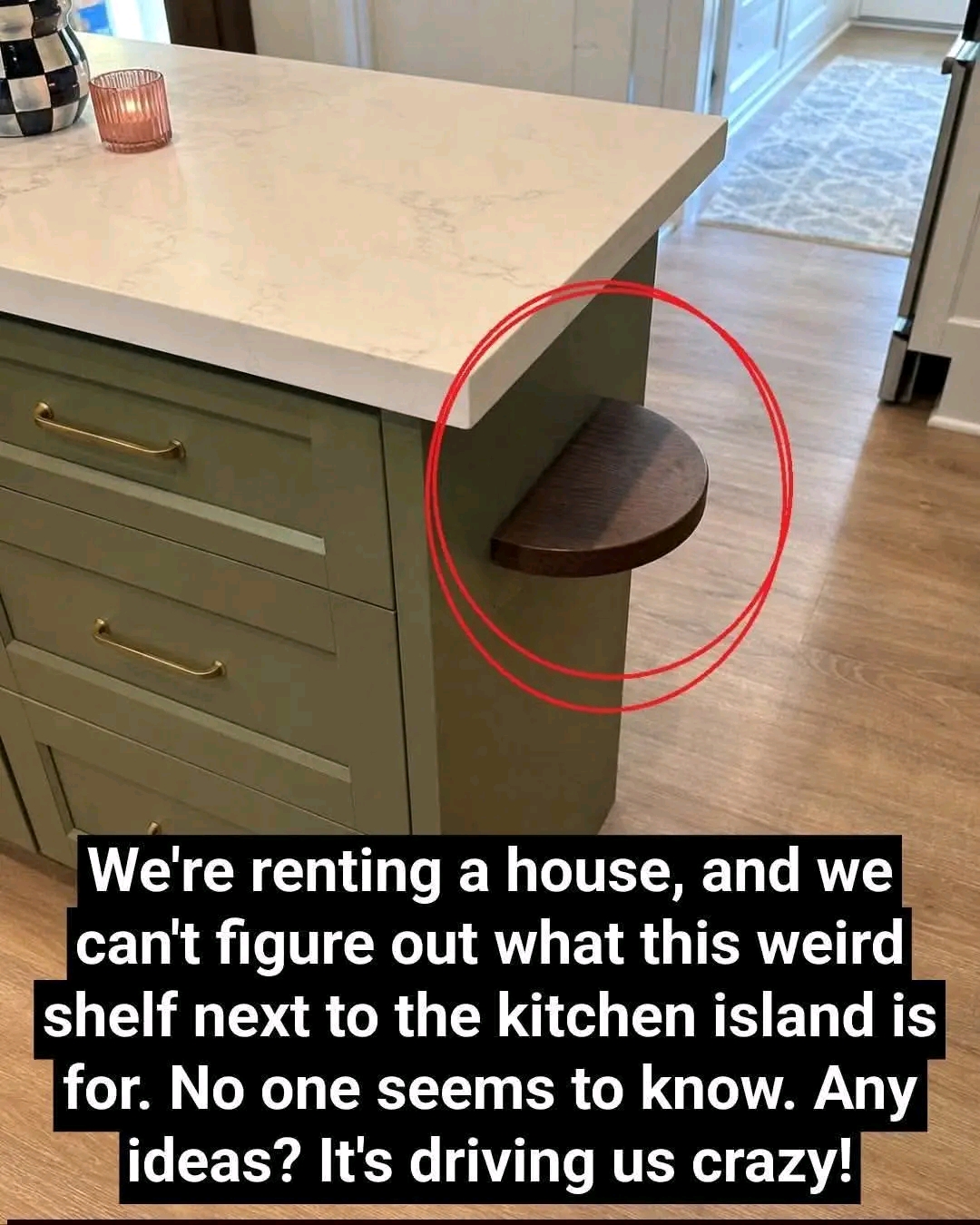
🏠 The Mystery Kitchen Shelf — A “What Is This For?” Recipe
Introduction
Every kitchen has that one strange feature that leaves everyone scratching their heads. Maybe it’s an unusually narrow cabinet, a tiny drawer, a strange hole in the countertop—or, in your case, a mysterious shelf beside the kitchen island.
Rather than letting it drive you crazy, imagine that the shelf is an ingredient in a recipe for discovering your kitchen’s hidden history!
The goal is to investigate its shape, dimensions, position, and construction and work out what the original designer intended.
🧺 Ingredients
- 1 mysterious kitchen shelf
- 1 measuring tape
- 1 flashlight
- 1 curious renter
- 1 kitchen island
- A little detective work
- A few cookbooks or trays for testing
- Baking sheets
- Cutting boards
- Serving platters
- Spice jars
- Optional: a bottle of wine for scientific investigation 😉
- One helpful landlord or previous tenant, if available
🔎 Method 1: Measure the Shelf
Start by measuring:
- Width
- Height
- Depth
- Distance from the floor
- Distance from the countertop
These measurements can reveal a lot.
If it’s tall and narrow…
It may have been designed for:
- Baking trays
- Cutting boards
- Pizza pans
- Serving platters
- Cookbooks
If it’s shallow…
It could be intended for:
- Spices
- Small jars
- Cookbooks
- Decorative kitchen items
If it’s deep…
It might be:
- Pantry storage
- Appliance storage
- A concealed cabinet
- Storage for larger serving dishes
🍳 Method 2: Look at Its Position
The location next to the kitchen island is an important clue.
If the shelf is close to where food is prepared, the designer probably intended it for something used during cooking.
For example, a narrow vertical opening could be perfect for storing baking sheets and cutting boards upright.
If it is at approximately countertop height, it may have been intended for cookbooks, spices, utensils, or frequently used ingredients.
If it’s down near the floor, larger kitchen equipment or trays become more likely.
🥧 Method 3: The Baking-Sheet Test
Take a baking sheet and carefully place it inside.
If it fits vertically with a little room around it, you’ve discovered an excellent candidate:
A baking-sheet and cutting-board rack.
Try sliding several baking sheets, chopping boards, or serving trays into the space.
If they stand neatly without falling over, that’s a pretty strong clue.
📚 Method 4: The Cookbook Test
Put a few cookbooks on the shelf.
If they fit comfortably and the shelf is located around eye or waist level, it may have originally been designed as a cookbook display/storage area.
Older kitchens sometimes incorporated open shelving specifically for cookbooks because recipes were frequently kept within easy reach of the cooking area.
🍷 Method 5: The Bottle Test
If the openings are approximately bottle-sized and there are multiple horizontal compartments, the mystery may be solved:
It could be a bottle rack.
Wine racks are usually recognizable because the compartments are deliberately sized to hold bottles horizontally.
However, don’t assume every little cubby is a wine rack. Kitchen designers also use similar arrangements for oils, vinegar, jars, and decorative storage.
🧂 Method 6: The Spice Test
If the shelf is relatively shallow, place several spice containers inside.
A narrow shelf beside an island can sometimes be intended as a spice or seasoning rack, especially if it is conveniently positioned near the cooking surface.
The clue is accessibility: things used constantly while cooking are usually placed where the cook can reach them easily.
🏡 A Little History
Kitchen design has changed dramatically over the years.
Older kitchens often used individual pieces of furniture for storage—such as cupboards, baker’s racks, hutches, and freestanding shelves.
Modern kitchens increasingly integrate storage directly into islands and cabinetry.
As a result, an unusual shelf may have been designed for a very specific purpose that isn’t immediately obvious today.
And because houses are renovated, owners sometimes remove one appliance or piece of furniture while leaving the original storage feature behind.
That’s why a shelf can occasionally look completely mysterious to the next renter.
🧩 Formation: How to Identify Its Original Purpose
Think of the shelf as a puzzle.
Clue #1 — Shape
Very narrow: trays, boards, bottles, spices.
Wide: dishes, appliances, cookbooks.
Deep: pantry or appliance storage.
Clue #2 — Height
Floor level: heavy equipment or trays.
Counter height: cooking ingredients or appliances.
Eye level: cookbooks or display storage.
Clue #3 — Dividers
Vertical dividers strongly suggest:
- Baking sheets
- Cutting boards
- Trays
- Platters
Horizontal cubbies suggest:
- Bottles
- Jars
- Decorative storage
- Pantry items
Clue #4 — Location
Next to an island usually means the item was intended to be conveniently accessible while preparing food.
❤️ Who Will Love This Mystery Shelf?
The Organized Cook
Perfect for keeping baking sheets and cutting boards upright instead of stacking them in a messy cabinet.
The Baker
A dedicated place for cookie sheets, muffin tins, pizza pans, and cooling racks can be incredibly useful.
The Cookbook Lover
An open shelf can turn recipe books into part of the kitchen décor.
The Entertainer
Serving platters and trays can be stored close to the island and grabbed quickly when guests arrive.
The Curious Renter
Most importantly, it gives you an excuse to investigate the strangest feature in the house. 😂
🕵️ The Final Detective Method
Before deciding, look carefully for:
- Screw holes
- Metal rails
- Old brackets
- Cabinet doors that may have been removed
- Adjustable shelf pins
- Scratches or wear marks
- Stains
- Labels
- Unusual grooves
- Dividers
- Electrical outlets nearby
- Ventilation openings
Wear patterns are particularly useful.
If the bottom of the shelf has scratches concentrated in one area, something may repeatedly have been slid in and out.
If there are circular stains, bottles may have lived there.
If there are long scratches or dents, trays or baking sheets may have been stored vertically.
🍽️ Conclusion
My first suspects for a mysterious shelf beside a kitchen island would be:
- 🥇 Baking-sheet/tray storage
- 🥈 Cutting-board storage
- 🥉 Cookbook shelf
- Bottle rack
- Spice or pantry storage
- Serving-platter storage