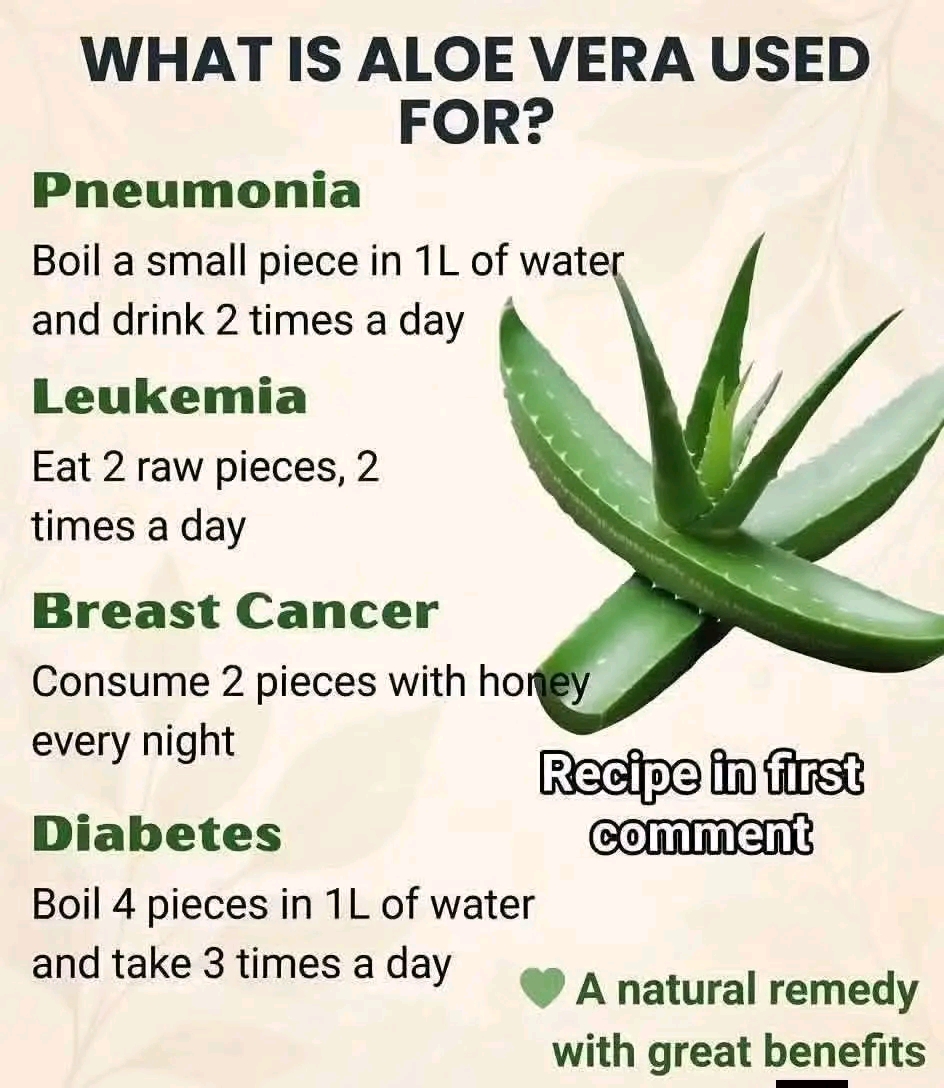
🌿 16 Health Problems That Aloe Vera Could Help Support
Aloe vera has been treasured for centuries as one of nature’s most fascinating plants. With its thick green leaves filled with a clear, cooling gel, aloe vera has traveled through history as a traditional ingredient in skin care, beauty rituals, and home remedies.
But what makes this humble plant so popular? Aloe vera gel contains water and various naturally occurring compounds that may help soothe and moisturize the skin. Today, it is found in everything from lotions and shampoos to drinks and wellness products.
Let’s explore 16 common health and wellness concerns where aloe vera may offer supportive benefits, along with a simple homemade aloe vera gel preparation.
🌱 A Brief History of Aloe Vera
The use of aloe vera goes back thousands of years. Ancient civilizations in Egypt, Greece, India, and other parts of the world valued the plant for its soothing qualities.
Aloe vera was traditionally applied to dry or irritated skin and became known as an important plant in many traditional beauty and wellness practices. Over time, its popularity spread around the world.
Today, aloe vera remains a favorite natural ingredient, especially in products designed to moisturize and soothe the skin.
🌿 16 Problems Aloe Vera May Help Support
1. ☀️ Dry Skin
Aloe vera gel is mostly water and can help provide a refreshing, moisturizing feeling to dry skin.
Apply a small amount of clean aloe gel to the skin and allow it to absorb.
2. 🔥 Minor Skin Irritation
Aloe vera is widely used for its cooling sensation and may help soothe minor skin discomfort.
Always avoid using homemade remedies on serious wounds or severe burns without medical advice.
3. ☀️ Mild Sun-Exposed Skin Discomfort
Many people use aloe vera after spending too much time in the sun because of its cooling and moisturizing properties.
For serious sunburn or blistering, seek medical advice.
4. 💧 Dehydrated-Looking Skin
Aloe gel can be used as part of a moisturizing routine to help the skin feel refreshed and hydrated.
5. 🧴 Rough Elbows and Knees
Dry areas such as elbows, knees, and heels may benefit from regular moisturizing.
Try combining aloe vera gel with a gentle moisturizer.
6. 🦶 Dry Feet
Aloe vera can be applied to clean feet as part of a nighttime skin-care routine.
For extra moisture, apply aloe gel followed by a suitable foot cream.
7. 💇 Dry Hair
Aloe vera is often included in hair products because it can provide moisture and leave hair feeling softer.
8. 🌿 Dry Scalp
Some people enjoy aloe-based scalp products for their refreshing and moisturizing properties.
However, persistent itching or scaling should be checked by a healthcare professional.
9. 🪒 Post-Shaving Skin
The cooling texture of aloe gel makes it a popular ingredient in after-shave products.
Apply a small amount to clean skin if it does not cause irritation.
10. 💄 Chapped Lips
A small amount of properly prepared aloe-based lip product may help moisturize dry lips.
Use products specifically formulated for use around the mouth.
11. 🧼 Everyday Skin Care
Aloe vera can be incorporated into a simple skin-care routine as a lightweight moisturizer.
12. 🌸 Temporary Skin Redness
Aloe’s cooling sensation may feel soothing for minor temporary skin discomfort.
Persistent redness should be evaluated by a medical professional.
13. 🧖 A Refreshing Face Mask
Aloe gel can be mixed with skin-friendly ingredients such as plain yogurt or oatmeal for a simple moisturizing mask.
Always patch-test first.
14. 💅 Dry Cuticles
A small amount of aloe vera gel can be gently massaged around dry cuticles to add moisture.
15. 👐 Dry Hands
Aloe gel can be used as a lightweight moisturizer after washing your hands.
For very dry hands, follow with a richer hand cream.
16. 🌿 General Wellness and Relaxation
For many people, growing and using aloe vera is part of a calming self-care routine. The simple act of caring for plants and creating natural skin-care preparations can be relaxing and enjoyable.
⚠️ Important: Aloe vera should not be presented as a cure for serious diseases. If you have a medical condition, speak with a qualified healthcare professional before using aloe products internally.
🥣 Homemade Aloe Vera Skin Gel
🌿 Ingredients
- 1 large fresh aloe vera leaf
- Clean water
- 1 clean glass container
- Optional: a small amount of a suitable cosmetic preservative if storing longer-term
🔪 Preparation Method
Step 1: Choose a Healthy Leaf
Select a mature, healthy aloe vera leaf. Wash the outside thoroughly.
Step 2: Remove the Base
Cut off the bottom portion of the leaf.
Step 3: Drain the Yellow Sap
Stand the leaf upright and allow the yellow latex-like sap to drain away.
Important: The yellow latex is different from the clear inner gel and should not be confused with it.
Step 4: Remove the Outer Skin
Carefully slice away the green outer layer.
Step 5: Collect the Clear Gel
Scoop out the clear inner gel with a clean spoon.
Step 6: Rinse Carefully
Rinse the gel if necessary to remove any remaining yellow material.
Step 7: Blend
Blend briefly until smooth.
Step 8: Store Safely
Place the fresh gel in a clean container and refrigerate. Homemade aloe gel is perishable, so make small batches and discard it if its smell, color, or texture changes.
🌿 Simple Aloe Vera Face Mask
Ingredients
- 2 tablespoons aloe vera gel
- 1 tablespoon plain yogurt
- 1 teaspoon finely ground oatmeal
Instructions
- Place all ingredients in a clean bowl.
- Mix until smooth.
- Apply a small amount to clean skin.
- Leave on briefly if your skin tolerates it.
- Rinse gently with cool or lukewarm water.
- Apply your usual moisturizer.
Always patch-test new ingredients first.
💚 Methods of Using Aloe Vera
🌿 Method 1: Direct Skin Moisturizing
Apply a small amount of clean gel to intact skin.
🧴 Method 2: Add to Your Skin-Care Routine
Use aloe-based products formulated for your skin type.
💇 Method 3: Hair Care
Choose an aloe-containing conditioner or hair product for additional moisture.
🦶 Method 4: Foot Care
Apply aloe gel to clean feet, followed by moisturizer if desired.
🧖 Method 5: Cooling Self-Care
Store a properly formulated aloe skin product according to its instructions for a refreshing sensation.
❤️ Why Aloe Vera Lovers Adore This Plant
Aloe vera lovers appreciate this plant because it is:
🌿 Easy to grow
💧 Naturally refreshing
🧴 Popular in skin-care products
💇 Common in hair-care products
🌱 Beautiful as a houseplant
✨ Simple to include in a self-care routine
For many people, aloe vera represents the beauty of simple, plant-inspired self-care.
⚠️ Important Safety Notes
Although aloe vera is popular, natural does not always mean risk-free.
- Patch-test aloe products before using them widely.
- Stop using a product if irritation occurs.
- Do not apply homemade preparations to serious wounds or severe burns.
- Be cautious with homemade aloe products near the eyes and mouth.
- Do not consume aloe latex.
- Talk with a healthcare professional before taking aloe products internally, especially if you take medications, are pregnant, or have an ongoing health condition.
🌿 Conclusion
Aloe vera has a long and fascinating history and remains one of the world’s most popular plants for skin care and natural beauty routines. Its clear gel is valued for its cooling and moisturizing qualities and can be a pleasant addition to everyday self-care.
While aloe vera may help support comfort, moisture, and skin care, it should not replace proper medical treatment for serious health problems.
Enjoy aloe vera for what it does best: a beautiful plant and a refreshing addition to a thoughtful wellness routine. 🌿💚
❤️ Do you love aloe vera? Comment “🌿 ALOE” if this amazing plant is part of your home or beauty routine!
And don’t forget to share this with another natural wellness lover! 🌱✨