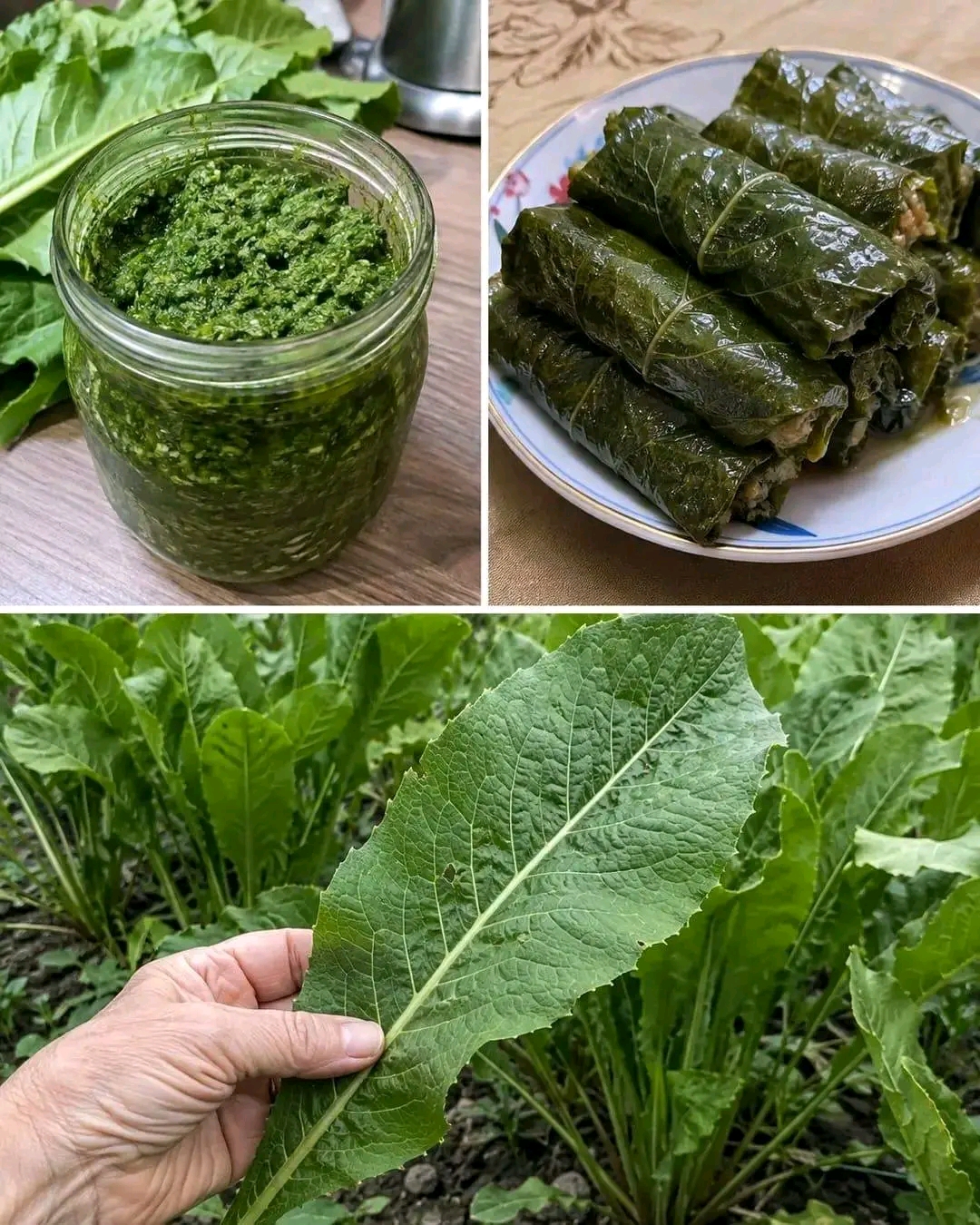
💚 Horseradish Leaves: A Delicious Way to Use the Whole Plant
Introduction
People often think of horseradish only as the fiery white root served alongside roast beef, sandwiches, or sauces. But the young leaves can also be used as a flavorful green, especially when harvested while tender. They have a peppery, slightly bitter character that becomes much milder when cooked.
This recipe turns fresh horseradish leaves into a comforting garlic-and-lemon sautéed green, with optional potatoes and beans for a hearty side dish. It is simple, rustic, and a wonderful way to reduce kitchen waste.
🌿 Ingredients
For 4 servings:
- 6–8 young, fresh horseradish leaves
- 2 tablespoons olive oil
- 3 cloves garlic, finely chopped
- 1 small onion, thinly sliced
- 2 medium potatoes, diced
- 1 cup cooked white beans or chickpeas
- ½ teaspoon salt, plus more to taste
- ¼ teaspoon black pepper
- ½ teaspoon paprika
- ½ teaspoon dried thyme
- Juice of ½ lemon
- 1 tablespoon butter, optional
- 2 tablespoons chopped fresh parsley
- A pinch of chili flakes, optional
- 2–3 tablespoons water or vegetable stock
🥬 Preparing the Horseradish Leaves
Choose young, tender leaves rather than very old, tough leaves. Wash them thoroughly under cool running water to remove soil and grit.
Remove any particularly thick stems, then stack the leaves and slice them into strips.
Because horseradish leaves can have a strong, bitter or peppery taste, cooking them helps soften their flavor.
👩🍳 Instructions
1. Prepare the potatoes
Place the diced potatoes in a saucepan of lightly salted water. Simmer for about 8–10 minutes, until almost tender. Drain and set aside.
2. Sauté the aromatics
Heat olive oil in a large skillet over medium heat. Add the onion and cook for 3–4 minutes until softened.
Add the garlic and cook for another 30–60 seconds, taking care not to burn it.
3. Add the potatoes
Add the partially cooked potatoes to the skillet. Sprinkle in paprika, thyme, black pepper, and a little salt.
Cook for 4–5 minutes, stirring occasionally, until the potatoes begin to develop a golden crust.
4. Add the horseradish leaves
Add the sliced horseradish leaves a handful at a time. Toss them with the potatoes and onions.
Add 2–3 tablespoons of water or vegetable stock, cover the pan, and cook for approximately 5–8 minutes.
The leaves should become tender while retaining some texture.
5. Add the beans
Stir in the cooked white beans or chickpeas. Continue cooking for another 2–3 minutes so everything becomes hot and well combined.
6. Finish with lemon
Turn off the heat. Add the lemon juice and optional tablespoon of butter.
Taste and adjust the seasoning.
Finish with fresh parsley and, if desired, a small pinch of chili flakes.
🍋 The Final Method
For the best flavor, serve this dish warm and immediately after cooking. The combination of earthy potatoes, creamy beans, garlic, lemon, and peppery greens creates a satisfying balance.
For an even richer meal, you can serve the greens with:
- Grilled chicken
- Roast beef
- Fried or poached eggs
- Crusty bread
- Rice
- Grilled fish
🏡 A Little History
Horseradish has been cultivated and used as a food plant for centuries. Its pungent root became particularly popular in European cooking, where it was grated into sauces and served with meat and other hearty dishes.
The plant itself is a hardy perennial in the mustard family. While the root is the part most commonly associated with horseradish, the leaves have also been used as a cooked green or incorporated into traditional food preparations in some regions.
Its characteristic sharpness comes from compounds produced when the plant’s tissues are damaged—for example, when the root is grated.
🌱 Formation of the Dish
This recipe follows a simple rustic cooking pattern:
Aromatics → potatoes → horseradish leaves → beans → lemon → fresh herbs
Each stage contributes something different:
- Onion: sweetness
- Garlic: savory depth
- Potatoes: comfort and texture
- Horseradish leaves: peppery green flavor
- Beans: protein and creaminess
- Lemon: brightness
- Parsley: freshness
❤️ Who Will Love It?
This dish is perfect for people who enjoy:
- Rustic vegetable dishes
- Garlic and lemon flavors
- Peppery greens
- Mediterranean-inspired cooking
- Budget-friendly meals
- Using more of the plants they grow
- Vegetarian side dishes
It is especially enjoyable served family-style with warm bread and a simple main course.
🔥 Alternative Cooking Method: Creamy Horseradish Greens
For an entirely different version, sauté the leaves with garlic and onion, then add ½ cup cream or cooking cream, a little black pepper, and grated Parmesan.
Simmer gently for 2–3 minutes until creamy.
Serve over toasted bread, pasta, potatoes, or grilled chicken.
⚠️ Important Note
Only eat horseradish leaves when you are certain the plant has been correctly identified and was grown in a clean, food-safe environment. Avoid leaves that have been exposed to pesticides or contaminated soil. Young leaves are generally preferable for cooking because older leaves can be tougher and more bitter.
Conclusion
Horseradish doesn’t have to be just about the fiery root. Its tender leaves can become a delicious cooked green when handled properly. With garlic, potatoes, beans, herbs, and a squeeze of lemon, they transform into a rustic dish that is both flavorful and satisfying.
💚 The next time you grow or buy horseradish, don’t automatically overlook the leaves—young leaves can bring an entirely different flavor to the table.
If you love discovering creative ways to use whole vegetables and herbs, this is definitely one to try! 🌿🥔🧄🍋