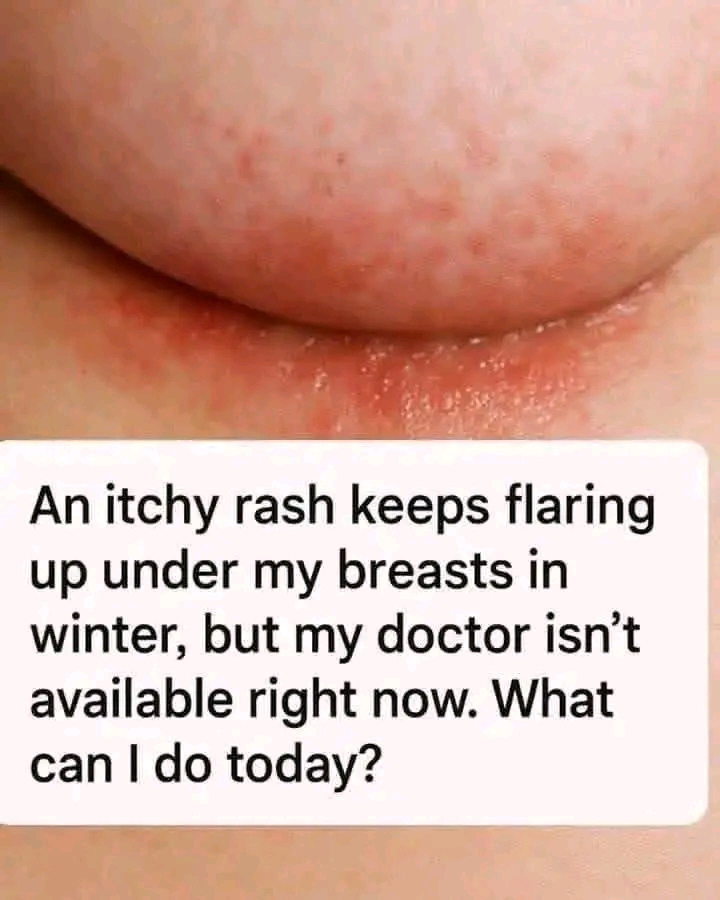
🌸 “Under-Breast Comfort Care” — what to do today
Introduction
Winter doesn’t necessarily protect skin-fold rashes. Sweat, limited airflow, tight clothing, friction, and moisture trapped beneath the breasts can all contribute. The goal today is simple: clean gently, dry completely, reduce rubbing, and treat possible yeast/fungal involvement appropriately.
🧺 What you need
- Lukewarm water
- A gentle, fragrance-free cleanser
- A clean, soft towel
- A clean cotton bra
- Optional: a cool-setting hairdryer
- A pharmacy-recommended antifungal cream if the pharmacist thinks the rash looks fungal
- Clean cotton gauze or a soft cotton cloth to separate the skin fold
- After the rash has cleared: a simple barrier such as zinc oxide or petrolatum can help reduce recurrence.
👣 Method 1 — Clean and dry
- Gently wash beneath the breasts.
- Rinse thoroughly.
- Pat—not rub—the area dry.
- If moisture remains, use a hairdryer on the cool setting, held at a comfortable distance.
- Put on a clean, supportive cotton bra.
Keeping the fold dry and reducing skin-on-skin friction are key parts of managing intertrigo.
🍃 Method 2 — If it looks like a fungal/yeast rash
If the area is red, itchy and irritated, a pharmacist can recommend an over-the-counter antifungal such as clotrimazole when appropriate. Clotrimazole is specifically used for fungal rashes in skin folds. Follow the product instructions and ask the pharmacist about your particular rash.
Don’t automatically use a steroid cream alone on a rash that might be fungal, because the correct treatment depends on the cause. If the skin is broken, weeping, blistered, or very painful, get professional advice before applying medication.
🌿 Method 3 — Reduce winter flare-ups
- Change out of damp clothing promptly.
- Wear breathable cotton rather than clothing that traps moisture.
- Change your bra daily, or sooner if it becomes damp.
- Keep the fold dry after bathing.
- Avoid perfumes, fragranced lotions and harsh soaps on the area.
- Don’t scratch—the skin can become damaged and infected.
- Don’t use talcum powder if it irritates you; some breast-care guidance specifically discourages it.
🕰️ Why does it keep coming back?
Intertrigo develops when friction + warmth + moisture repeatedly affect a skin fold. Yeast, fungi or bacteria can then multiply in the irritated area. That’s why simply treating the itch without controlling moisture and friction may lead to repeated flares.
❤️ Who will love this routine?
Anyone who gets recurring irritation beneath the breasts can benefit from the basic clean → dry → reduce friction → monitor routine. But because yours keeps flaring up, it’s worth having a pharmacist or doctor examine it when available rather than assuming every episode is fungal.
🚨 When not to wait for your doctor
Seek prompt medical attention if you develop rapidly spreading redness, significant swelling, severe pain, warmth, pus, a strong unpleasant discharge, fever/chills, or feel generally unwell. Also get the breast checked if you notice a new breast lump, nipple changes/discharge, skin dimpling, or a rash involving the nipple rather than just the skin fold.
Conclusion
For today, don’t try an elaborate home remedy. Gently wash the area, dry it extremely well, keep the fold separated with clean breathable cotton, wear a clean supportive bra, and ask a pharmacist whether an antifungal treatment is appropriate. Since the rash is recurrent, arrange a medical review when possible to establish exactly what’s causing it.
One important note: if you’re pregnant/breastfeeding, taking other medicines, or the skin is cracked/open, tell the pharmacist before using an antifungal or steroid product. Some antifungal medicines aren’t suitable in every situation.