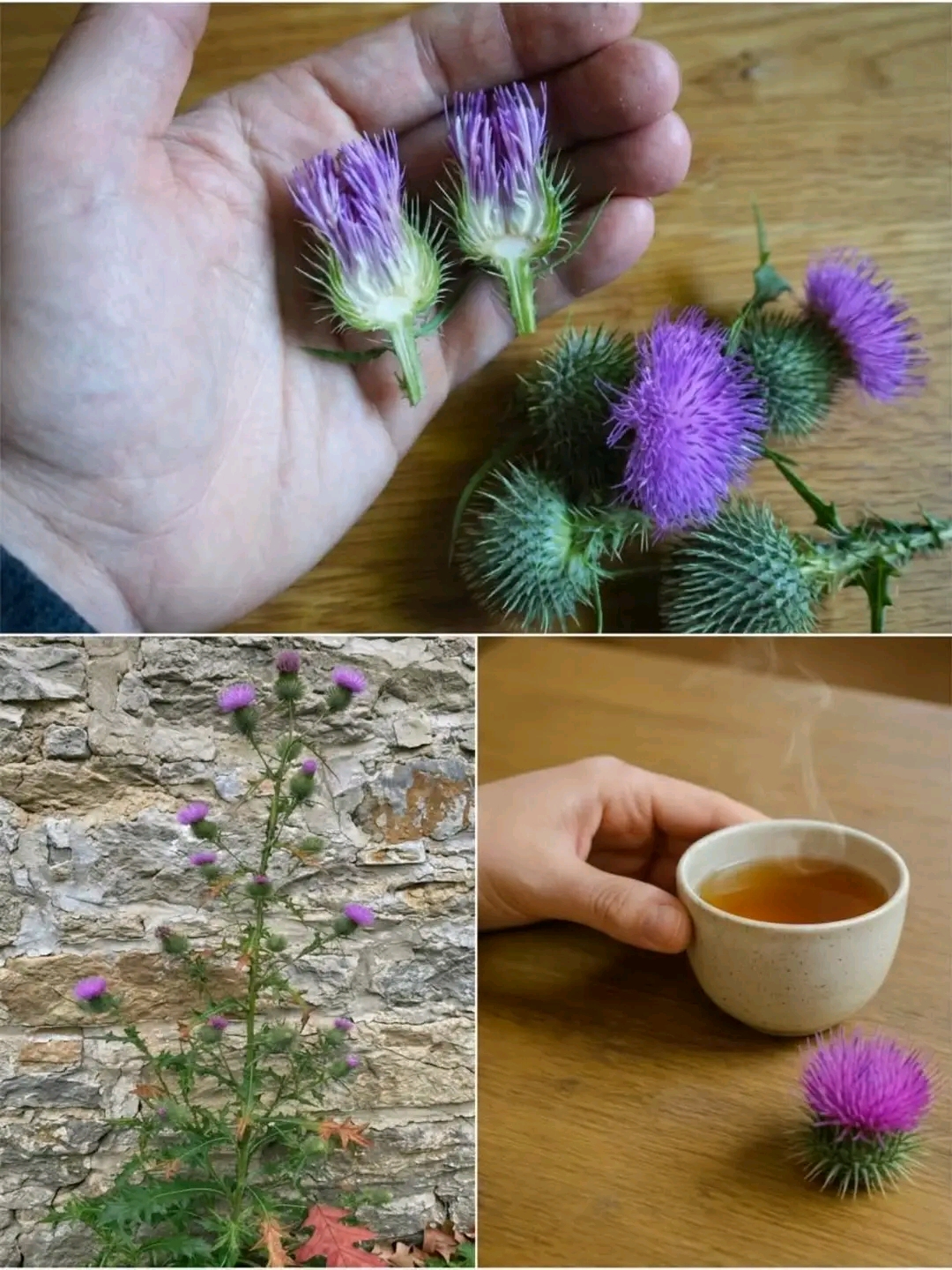
🌿 Spiny Purple Thistle: Garlic, Lemon & Herb Braised Artichokes
Introduction
At first glance, the spiny purple thistle looks like something you would admire from a distance rather than invite into your kitchen. Beneath those tough leaves and prickly tips, however, lies one of the most beloved edible thistles in Mediterranean cooking: the artichoke.
When prepared properly, artichokes become tender, earthy, slightly sweet, and wonderfully creamy in texture. This recipe combines them with garlic, lemon, olive oil, fresh herbs, and gentle braising to create a simple dish with a beautiful Mediterranean character.
It is perfect as a starter, vegetable side dish, light lunch, or centerpiece for a rustic table.
🥬 Ingredients
For the Artichokes
- 4 large fresh globe artichokes
- 1 lemon
- 4 tablespoons extra-virgin olive oil
- 5 garlic cloves, finely sliced
- 1 small onion, finely chopped
- 1½ cups vegetable or chicken broth
- ½ cup dry white wine, optional
- 2 tablespoons fresh parsley, chopped
- 1 tablespoon fresh mint, chopped
- 1 teaspoon dried oregano
- ½ teaspoon black pepper
- ½ teaspoon salt, or to taste
- ¼ teaspoon red pepper flakes, optional
For Extra Flavor
- 1 tablespoon capers
- ½ cup cherry tomatoes, halved
- 2 tablespoons grated Parmesan, optional
- 1 tablespoon toasted breadcrumbs
- Fresh parsley for garnish
- Lemon wedges for serving
🍋 Preparing the Artichokes
Artichokes contain tough outer leaves and a fuzzy inner portion called the choke, which should be removed before eating.
Step 1: Prepare the Lemon Water
Fill a large bowl with cold water.
Cut the lemon in half and squeeze the juice into the water. Drop the squeezed lemon halves into the bowl.
This acidic water helps slow browning while you prepare the artichokes.
Step 2: Trim the Artichokes
Using a sharp knife, cut away the tough stem, leaving approximately 2–3 cm if desired.
Remove the small, tough outer leaves from the bottom.
Cut off the top portion of the artichoke, removing the sharp leaf tips.
Immediately rub the cut surfaces with lemon and place the artichoke in the lemon water.
Step 3: Remove the Choke
Carefully open the leaves.
Use a spoon to scoop out the fuzzy center and any small prickly fibers underneath it.
Do not remove the tender heart.
Place the cleaned artichoke back into the lemon water.
🌿 The Cooking Method
Method 1: Garlic and Herb Braising
This is the main method for the recipe.
Step 1: Build the Flavor
Heat the olive oil in a large heavy-bottomed skillet or Dutch oven over medium heat.
Add the chopped onion and cook for approximately 4–5 minutes until softened.
Add the sliced garlic and cook for another 30–60 seconds.
Be careful not to burn the garlic.
Step 2: Add the Artichokes
Drain the artichokes well.
Place them cut-side down into the pan.
Cook for approximately 3–4 minutes so the cut surfaces become lightly golden.
Turn them gently.
Step 3: Add the Liquid
Pour in the broth and, if using, the white wine.
Add:
- oregano
- black pepper
- red pepper flakes
- capers
- cherry tomatoes
Bring the liquid to a gentle simmer.
Step 4: Cover and Braise
Cover the pan.
Reduce the heat to low.
Allow the artichokes to cook gently for approximately 25–40 minutes, depending on their size.
They are ready when a knife can easily slide into the thick heart.
Avoid boiling aggressively because gentle cooking produces a more tender texture.
Step 5: Finish With Fresh Herbs
Remove the lid during the final few minutes.
Allow some of the cooking liquid to reduce.
Add fresh parsley and mint.
Taste and adjust the salt, pepper, and lemon.
Finish with a generous drizzle of extra-virgin olive oil.
🥖 Optional Crispy Topping
For an extra-special finish, heat a small skillet with a teaspoon of olive oil.
Add the breadcrumbs and toast until lightly golden.
Sprinkle them over the cooked artichokes immediately before serving.
For a richer version, add a little grated Parmesan.
🔥 Alternative Roasting Method
If you prefer roasted artichokes, prepare them as described above.
Place the cleaned artichokes in a baking dish.
Drizzle generously with olive oil.
Add garlic, lemon juice, salt, pepper, and herbs.
Pour approximately ½ cup of broth into the bottom of the dish.
Cover tightly with foil.
Bake at 190°C / 375°F for approximately 35–50 minutes, depending on size.
Remove the foil during the final 10 minutes to allow the edges to become beautifully golden.
🫒 Mediterranean Serving Method
Transfer the cooked artichokes to a serving platter.
Spoon the garlic-herb cooking juices over the top.
Add:
- fresh parsley
- lemon wedges
- a drizzle of olive oil
- toasted breadcrumbs
- a few capers
Serve warm or at room temperature.
The cooking juices are especially delicious when soaked up with crusty bread.
📜 A Little History
Edible thistles have a long history around the Mediterranean.
The globe artichoke is believed to have developed from cultivated forms of the cardoon and related thistles. Artichokes became particularly important in Mediterranean cuisines, where cooks learned to transform their tough appearance into tender, flavorful dishes.
They have appeared in many traditional preparations, including braised, stuffed, grilled, fried, and preserved versions.
Mediterranean cooking often pairs artichokes with ingredients such as olive oil, lemon, garlic, parsley, mint, and herbs because these flavors complement the vegetable’s earthy sweetness.
🌱 Formation & Structure of the Artichoke
What we commonly call an artichoke is actually a flower bud harvested before it blooms.
The layers of green or purple leaves protect the developing flower.
Inside is the tender heart, surrounded by the fuzzy choke.
If the bud is allowed to mature completely, it develops into a large purple thistle-like flower.
That is why this vegetable can look surprisingly ornamental before it reaches the dinner table.
💜 Why Herb Lovers Enjoy It
Artichokes have a flavor that works beautifully with herbs.
Fresh parsley adds brightness.
Mint adds freshness.
Oregano contributes a warm Mediterranean aroma.
Garlic provides savory depth.
Lemon cuts through the richness of olive oil and brings everything together.
The result is a dish that tastes rustic, fresh, aromatic, and satisfying without requiring complicated ingredients.
🍽️ What to Serve With It
These artichokes pair beautifully with:
- Crusty sourdough bread
- Grilled chicken
- Roasted fish
- Couscous
- Rice pilaf
- Roasted potatoes
- White beans
- A simple green salad
- Feta cheese
- Grilled vegetables
For a vegetarian meal, serve the artichokes with warm bread, white beans, tomatoes, olives, and a simple cucumber salad.
❤️ For the Lovers of Simple Food
This recipe is especially for people who love food that doesn’t need to be complicated.
There is something wonderful about taking an intimidating-looking vegetable, trimming away the tough parts, and slowly transforming it with a handful of everyday ingredients.
The combination of olive oil, garlic, lemon, and fresh herbs creates the kind of aroma that fills the kitchen and makes everyone wonder when dinner will be ready.
👩🍳 Chef’s Tips
Choose fresh artichokes
Look for artichokes that feel heavy for their size and have relatively firm, tightly packed leaves.
Use plenty of lemon
Artichokes can discolor quickly after cutting. Lemon water helps slow this process and also adds a pleasant brightness.
Don’t rush the braising
Low and slow cooking helps the heart become tender while allowing the flavors to penetrate the leaves.
Taste before serving
Artichokes can vary in size and flavor, so always taste the finished dish and adjust the lemon, salt, and herbs.
Don’t eat the tough parts
The tender heart and appropriate portions of the leaves are edible after cooking, but the tough outer leaves and fuzzy choke should be discarded.
⚠️ Important Safety Note
The phrase “spiny purple thistle” can describe many different wild plants, and not every thistle is edible. Do not collect or eat an unidentified wild thistle based only on its appearance.
This recipe is specifically written for cultivated edible globe artichokes purchased from a reputable food source.
🌿 Conclusion
The humble artichoke proves that beautiful food does not always begin with something that looks beautiful.
Behind its prickly exterior is a tender heart waiting to be discovered.
Slowly braised with garlic, lemon, olive oil, parsley, mint, and herbs, the artichoke becomes soft, fragrant, and deeply satisfying.
Serve it as an appetizer, side dish, or centerpiece for a Mediterranean-inspired meal.
And for all the herb lovers out there, this is one recipe worth keeping close: simple ingredients, gentle cooking, and a whole lot of flavor. 🌿💜🍋