🩺 The Smallpox Vaccine Scar: A Recipe for a Piece of Medical History
Introduction
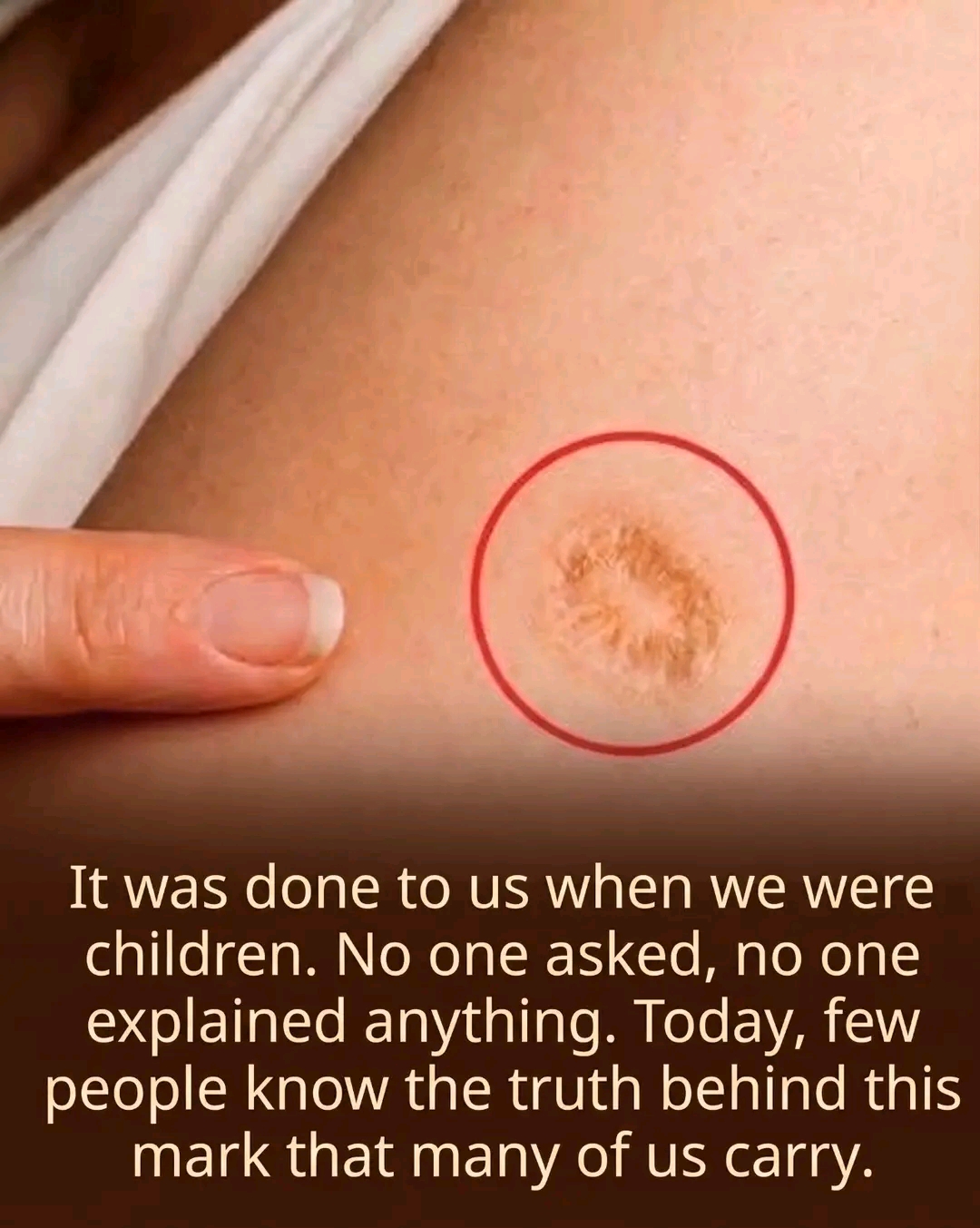
A small, round scar on the upper arm may look like an ordinary mark, but for many people it represents something extraordinary: a chapter in the history of medicine.
For generations, people who received the smallpox vaccine carried a distinctive circular scar. Unlike most vaccines given today, the traditional smallpox vaccine was administered through the skin using a special bifurcated, or two-pronged, needle. The skin was punctured several times, creating a localized reaction that eventually healed and could leave a permanent scar.
Today, that little mark is often remembered as a symbol of humanity’s successful fight against one of the most devastating infectious diseases in history.
Ingredients
Historical “ingredients”
- Smallpox vaccine containing vaccinia virus
- A sterile bifurcated, two-pronged vaccination needle
- Clean skin
- A trained healthcare worker
- Time for the body’s immune response
- Time for the vaccination site to heal
Important: This is a historical description, not a recipe or set of instructions for administering a vaccine. Smallpox vaccination is not something to attempt at home.
Instructions
Step 1 — Preparing the vaccination
Historically, the vaccine was prepared for administration by trained medical personnel. The vaccine used vaccinia virus, which is related to the virus that causes smallpox but is different from it.
Step 2 — The skin-prick method
The traditional bifurcated needle was dipped into the vaccine and used to make a series of tiny punctures in the skin, commonly on the upper arm.
This was very different from the intramuscular injections familiar today.
Step 3 — The body’s reaction
After vaccination, the site could develop a characteristic progression.
It might begin with:
Redness → swelling → a small blister or raised lesion → scab → healing
The immune system recognized the vaccinia virus and mounted an immune response.
Step 4 — Healing
As the vaccination site healed, the scab eventually disappeared. In many people, the healing process left a small, round, textured scar.
The appearance could vary considerably from person to person.
Step 5 — The lasting mark
Years or even decades later, the scar could remain visible on the upper arm.
For people vaccinated during the era when smallpox vaccination was widespread, it became an unmistakable reminder of a major public-health campaign.
The Method Behind the Scar
The important part of the story is not the scar itself but the immune response behind it.
The vaccine introduced vaccinia virus into the skin, where the immune system encountered viral material and developed immune defenses. The local skin reaction was part of the vaccination process.
The scar was therefore not the vaccine’s “proof” of immunity by itself. Someone’s scar does not reliably establish how well protected they are today.
Modern medicine uses vaccination records, medical history, and appropriate laboratory or clinical guidance rather than simply looking for a scar.
History
Smallpox was one of humanity’s most feared infectious diseases.
The disease was caused by variola virus and could produce high fever and a characteristic widespread rash. Severe cases could be fatal, and survivors could be left with permanent scars or other complications.
Vaccination transformed the situation.
The origins of smallpox vaccination are associated with earlier practices of variolation and, later, Edward Jenner’s pioneering work in 1796. Jenner demonstrated that exposure to cowpox could provide protection against smallpox.
Over the following centuries, vaccination methods continued to develop.
During the 20th century, international vaccination campaigns became increasingly effective. The World Health Organization launched an intensified global smallpox eradication program, combining vaccination, surveillance, case investigation, and containment.
The final naturally occurring case of smallpox was recorded in Somalia in 1977.
In 1980, the World Health Organization officially declared smallpox eradicated.
That achievement remains one of the greatest accomplishments in public-health history.
Formation of the Famous Scar
The classic scar was created by the particular way the vaccine was administered and the skin’s healing response.
The bifurcated needle made multiple superficial punctures. A local lesion could develop at the vaccination site, followed by a scab and eventual healing.
During the healing process, collagen and other components of the skin were reorganized. Depending on the individual and the vaccination technique, this could produce a permanent circular or irregular scar.
Not everyone developed an identical mark.
Some scars were large and pronounced, while others were small or barely noticeable.
Why the Scar Became So Familiar
For much of the 20th century, smallpox vaccination was routine in many countries.
Millions of people therefore grew up with similar marks on their arms.
The scar became almost a visual language of its generation.
Someone could look at another person’s arm and recognize that familiar circular mark and immediately understand its connection to the era of smallpox vaccination.
Today, younger generations may never have received the vaccine because routine smallpox vaccination ended in many countries after the disease was eliminated.
The Human Story
Behind every vaccination campaign were millions of individual people.
Parents brought children to clinics.
Healthcare workers traveled to communities.
Public-health teams searched for cases.
Vaccination teams worked across borders and difficult environments.
The campaign was not successful because of one invention alone. It required science, organization, surveillance, cooperation, persistence, and enormous human effort.
The little scar became one visible reminder of that collective achievement.
A Symbol of Prevention
Perhaps the most powerful lesson of the smallpox scar is that prevention can change history.
Smallpox once caused enormous suffering and death.
Today, naturally occurring smallpox no longer circulates among humans.
That does not mean the scar itself is medically necessary or that a visible scar is required for vaccination protection. Rather, the scar has become a historical symbol of an era when vaccination helped eliminate a devastating disease.
For the History Lovers ❤️
For people who love medical history, this tiny mark is fascinating because it connects several stories at once:
- The development of vaccination
- The science of immunology
- The evolution of medical instruments
- The work of public-health organizations
- Global cooperation
- The eradication of an infectious disease
A mark only a few millimeters wide can therefore tell a story spanning centuries.
Conclusion
The smallpox vaccine scar is much more than an unusual circle on an arm.
It represents a time when vaccination was performed differently, when a visible skin reaction was common, and when public-health workers were engaged in a worldwide effort to eliminate a deadly disease.
Smallpox eradication demonstrated what coordinated science and public-health action can accomplish.
So when someone notices that familiar little scar, they may be looking at a tiny piece of medical history — a permanent reminder of a disease that humanity succeeded in defeating.
The scar is small. The story behind it is enormous.