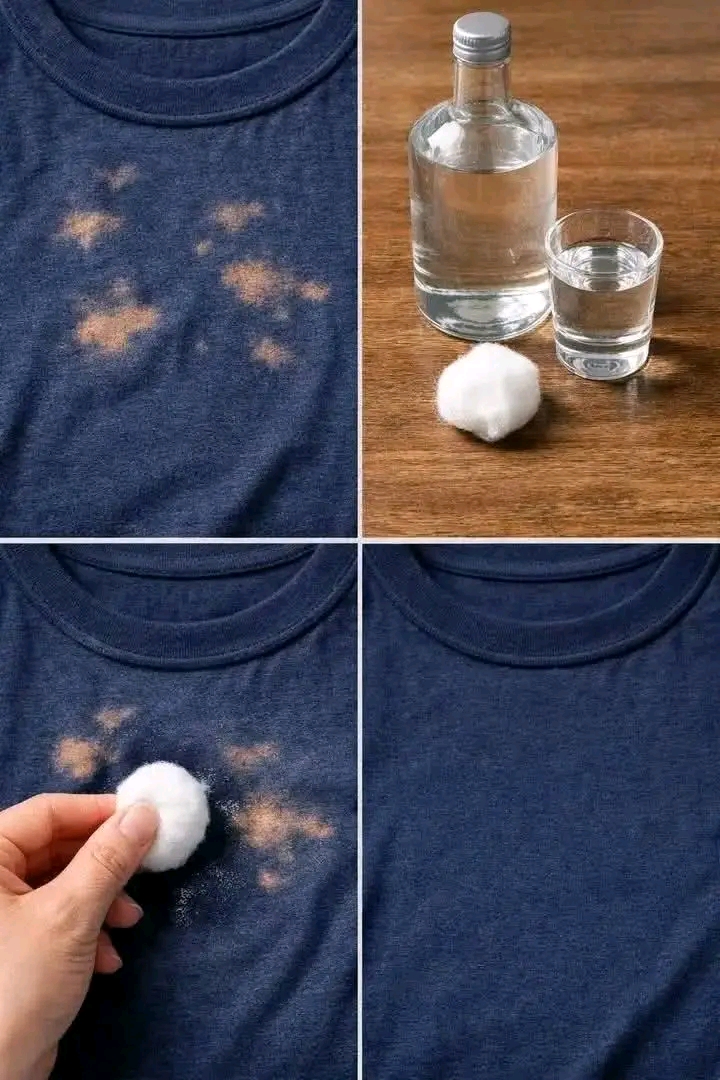
👕✨ Bleach Stains on Your Clothes? Don’t Throw Them Away Yet!
🌿 Introduction
Accidentally splashed bleach on your favorite shirt, pants, towel, or sweatshirt? That familiar white or orange spot can make an otherwise beautiful piece of clothing look ruined.
But before you throw it away, give it a second life! While bleach stains generally cannot be removed because the bleach has already stripped away the fabric’s color, you can often repair, disguise, recolor, or creatively transform the damaged area.
This simple fabric-repair method is especially useful for dark cotton clothing and can turn an annoying accident into a wearable piece again.
🧺 What You’ll Need
For a Small Bleach Spot
- 1 clean cloth
- Mild laundry detergent
- Cold water
- Cotton swabs
- Fabric marker or fabric paint in a matching color
- Small piece of cardboard or plastic
For Larger Bleach Damage
- Fabric dye suitable for your garment
- Gloves
- A container or basin
- Warm water, according to the dye instructions
- Mild detergent
- Old towel
- Optional: fabric paint or decorative patches
⚠️ Important Safety Note
Never mix bleach with vinegar, ammonia, alcohol, acids, or other household cleaners. Dangerous gases can form.
If the bleach spill has just happened, work in a well-ventilated area and rinse the affected fabric thoroughly with plenty of water.
👕 Method 1: Repair a Small Bleach Spot
Step 1 — Rinse the Garment
If the bleach has recently spilled, immediately rinse the affected area thoroughly with cool running water.
This helps remove remaining bleach from the fibers.
Step 2 — Wash the Garment
Wash the clothing separately using a mild detergent and follow the garment’s care label.
Allow it to dry completely before attempting a color repair.
Step 3 — Protect the Inside
Place a piece of cardboard or plastic behind the stained area. This prevents fabric marker or paint from transferring through to the other side.
Step 4 — Match the Color
Choose a fabric marker or fabric paint that closely matches the original color.
For a very small spot, gently dab the color onto the bleached area rather than drawing heavily over it.
Step 5 — Build the Color Slowly
Let each thin layer dry before adding another.
For dark clothing, you may need several light applications to achieve a closer match.
Step 6 — Let It Set
Allow the repaired area to dry completely and follow the fabric-marker or fabric-paint manufacturer’s instructions for setting the color.
🎨 Method 2: Turn the Stain Into a Design
Sometimes the easiest repair is to stop trying to hide the bleach mark!
You can transform several bleach spots into an intentional design.
Try creating:
- ⭐ Stars
- 🌸 Flowers
- ❤️ Hearts
- 🍃 Leaves
- Abstract patterns
- Small dots
- Tie-dye-inspired designs
You can even add several matching details throughout the garment so the original bleach spot looks intentional.
🧵 Method 3: Use a Decorative Patch
For a larger damaged area, a fabric patch can be one of the easiest solutions.
Choose a patch that matches your style and attach it according to the manufacturer’s instructions.
For clothing that receives frequent washing, stitching the patch securely can provide additional durability.
🌈 Method 4: Re-Dye the Garment
If the bleach damage covers a large portion of the garment, consider completely recoloring it.
Step 1
Check the garment’s fabric composition and choose a dye designed for that fiber.
Step 2
Wash the garment first to remove dirt, oils, and fabric finishes.
Step 3
Prepare the dye according to the manufacturer’s instructions.
Step 4
Dye the entire garment evenly rather than attempting to dye only the bleached area.
Step 5
Rinse and wash the garment as directed by the dye manufacturer.
Step 6
Allow it to dry and inspect the finished color.
Keep in mind: bleach can damage fibers as well as remove color, so a heavily bleached area may remain lighter or have a different texture even after dyeing.
🧼 The Formation of the Repair
The key idea behind this method is simple: you aren’t actually removing the bleach stain.
Bleach works by chemically altering or destroying colored molecules in the fabric. That’s why a black shirt can develop a reddish, orange, or white mark after contact with bleach.
Once that color has been removed, ordinary laundry detergent cannot restore it.
The repair therefore focuses on one of three things:
1. Recoloring — replace the missing color with fabric-safe color.
2. Covering — hide the damaged area with a patch, embroidery, or decoration.
3. Transforming — turn the marks into an intentional pattern.
📜 A Little History of Clothing Repair
Repairing clothing is certainly not a new idea.
For generations, people have extended the life of garments through patching, darning, embroidery, dyeing, and creative alterations. Before inexpensive mass-produced clothing became common, repairing a damaged garment was often much more practical than replacing it.
Today, this philosophy has returned through visible mending, upcycling, embroidery, fabric painting, and creative clothing restoration.
A small accident doesn’t necessarily have to mean the end of a favorite garment.
❤️ For the Clothing Lovers
If you love a particular shirt, pair of jeans, sweatshirt, or dress, don’t immediately throw it away because of one bleach mark.
Sometimes the most memorable pieces are the ones that have been repaired or customized.
A little creativity can transform an accident into something completely unique.
💡 Extra Tips
- Always test fabric markers or dye on an inconspicuous area first.
- Check the clothing care label before using heat or chemicals.
- Don’t use household bleach to try to make the color “even.”
- For expensive, delicate, or sentimental garments, consider taking them to a professional textile cleaner or tailor.
- If the fabric feels weak, brittle, or damaged after the bleach exposure, covering the area may not be enough—the garment may need to be reinforced or retired.
- Keep repaired clothing away from additional bleach exposure.
🧺 Conclusion
A bleach mark doesn’t always mean your favorite clothing belongs in the trash.
Because bleach permanently changes the original color, there is no magic household ingredient that simply removes the stain. But with fabric color, dye, patches, embroidery, or a creative design, many garments can be given a completely new look.
So the next time a little bleach lands on your clothes, don’t panic. Rinse the garment, assess the damage, choose the right repair method, and give that favorite piece another chance. 👕✨
❤️ Love this idea?
Save this tip for the next laundry accident, share it with someone who has accidentally spilled bleach on their favorite clothes, and give your old garments a little more love instead of throwing them away! ♻️❤️