🥩 Perfectly Juicy Prime Rib Roast — Tender, Garlicky & Deeply Roasted
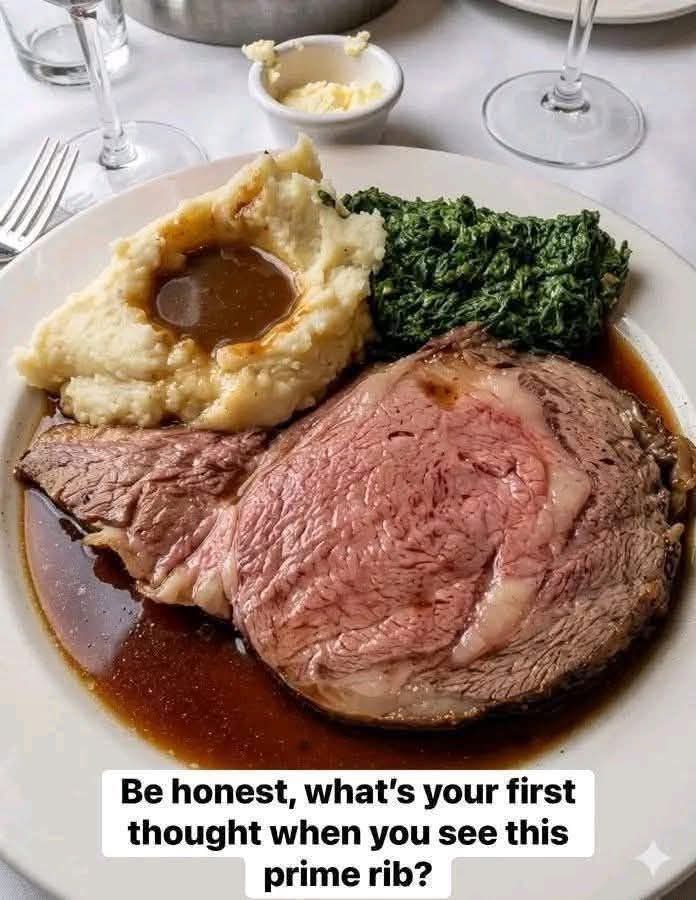
Be honest… what’s your first thought when you see a prime rib like this: perfectly juicy, or not cooked enough?
A beautifully pink center can make people wonder whether the roast is undercooked. But color alone cannot tell you whether beef is safely cooked; the USDA recommends using a food thermometer. For beef roasts, the USDA minimum is 145°F / 62.8°C followed by at least a 3-minute rest.
This recipe is designed to give you a rich, browned crust and a tender, juicy center, while allowing you to choose the doneness you prefer.
🥩 Introduction
Prime rib, also called a standing rib roast, is one of those dishes that turns an ordinary dinner into an occasion. The exterior develops a deeply seasoned crust while the generous marbling inside melts during roasting, giving every slice a luxurious beef flavor.
The secret isn’t complicated ingredients. It’s good beef, proper seasoning, controlled roasting, a thermometer, and patience.
🛒 Ingredients
For the Prime Rib
- 1 bone-in prime rib roast, about 4–6 lb (1.8–2.7 kg)
- 2½ tablespoons kosher salt
- 2 tablespoons freshly cracked black pepper
- 6 cloves garlic, finely minced
- 2 tablespoons fresh rosemary, chopped
- 1 tablespoon fresh thyme leaves
- 2 tablespoons olive oil
- 1 tablespoon Dijon mustard
- 1 teaspoon onion powder
- 1 teaspoon smoked paprika, optional
For the Pan
- 1 large onion, roughly chopped
- 2 carrots, chopped
- 2 celery stalks, chopped
- 1 cup beef stock
- ½ cup red wine, optional
- 2 sprigs rosemary
- 3–4 sprigs thyme
Optional Horseradish Cream
- ½ cup sour cream
- 2 tablespoons prepared horseradish
- 1 teaspoon Dijon mustard
- 1 teaspoon lemon juice
- Salt and black pepper to taste
👨🍳 Method 1 — Prepare the Roast
1. Dry the beef
Pat the prime rib thoroughly dry with paper towels.
This matters because a dry surface browns much better than a wet one.
2. Season generously
Combine the salt, pepper, garlic, rosemary, thyme, onion powder and paprika.
Rub the roast with olive oil and Dijon mustard, then press the seasoning mixture firmly over every surface.
For the best flavor, season the roast 12–24 hours ahead and refrigerate uncovered or loosely covered. This gives the seasoning time to penetrate the meat.
3. Bring it toward room temperature
Take the roast from the refrigerator before cooking and allow it to sit for a while so it isn’t extremely cold going into the oven.
Don’t leave raw meat sitting out for an extended period; keep food-safety practices in mind.
🔥 Method 2 — Roast the Prime Rib
1. Preheat the oven
Heat your oven to 450°F / 230°C.
Place the chopped onion, carrots and celery into the bottom of a roasting pan. Add the stock and optional wine.
Set the prime rib on a rack above the vegetables, fat side up.
2. Create the crust
Roast at 450°F / 230°C for about 15–20 minutes.
You should see the outside beginning to brown beautifully.
3. Lower the temperature
Reduce the oven to 325°F / 165°C and continue roasting.
Cooking time depends heavily on the size and shape of the roast, so don’t rely on time alone. USDA guidance also gives approximate rib-roast cooking times, but recommends using a thermometer because ovens and roasts vary.
🌡️ The Most Important Part: Temperature
This is where the argument of “juicy or not cooked enough?” gets settled.
Don’t judge the roast by its color.
Insert a meat thermometer into the thickest part of the roast, avoiding the bone.
For a roast prepared to USDA’s safety recommendation, the internal temperature should reach 145°F / 62.8°C, followed by at least a 3-minute rest.
For personal preference, many prime-rib lovers prefer a lower degree of doneness, but that does not change the USDA safety recommendation.
Approximate doneness guide
- Rare: very red center
- Medium-rare: warm pink/red center
- Medium: mostly pink center
- Medium-well: slight pink
- Well-done: little to no pink
Important: A pink center doesn’t automatically mean the roast is unsafe, and a brown center doesn’t automatically mean it’s safe. Temperature is the reliable way to check.
🛑 Method 3 — Resting the Roast
When the roast reaches your chosen temperature, remove it from the oven.
Place it on a cutting board and loosely tent it with foil.
For a large prime rib, resting for 20–30 minutes is an excellent way to let the juices settle before carving. Some traditional prime-rib methods specifically recommend a substantial resting period.
Don’t rush this step.
Cutting immediately can cause precious juices to run across the cutting board instead of remaining in the meat.
🔪 Method 4 — Carving
Remove the bones if desired by running a long carving knife along the bones.
Then slice the roast against the grain.
For a spectacular presentation, cut slices about ½–¾ inch thick.
Place the slices on a warm serving platter and spoon a little of the pan juice over the top.
🥣 Homemade Horseradish Cream
Mix together:
- Sour cream
- Horseradish
- Dijon mustard
- Lemon juice
- Salt
- Black pepper
Refrigerate for at least 20–30 minutes before serving.
The cool, sharp horseradish sauce is fantastic against the rich beef.
🥔 What to Serve With Prime Rib
Prime rib loves classic sides:
- Creamy mashed potatoes
- Crispy roasted potatoes
- Yorkshire pudding
- Roasted carrots
- Green beans
- Creamed spinach
- Garlic mushrooms
- Roasted Brussels sprouts
- Fresh garden salad
- Horseradish cream
- Rich beef gravy
For a holiday-style plate, serve prime rib + mashed potatoes + roasted vegetables + gravy + horseradish cream.
📜 A Little History
Prime rib belongs to the long tradition of roasting large cuts of beef for gatherings and celebrations. The term standing rib roast refers to a rib roast traditionally cooked standing on its bones.
Over generations, the dish became associated with special dinners, restaurants, Christmas meals, Sunday roasts and other celebrations.
Its popularity comes from a simple combination: the rib section naturally contains flavorful fat and marbling, and slow roasting allows that richness to develop while keeping the meat tender.
❤️ Formation of the Perfect Prime Rib
The final roast is created through several stages:
Seasoning → browning → controlled roasting → temperature checking → resting → carving
Each stage has a purpose.
The seasoning creates the foundation.
The high heat develops the crust.
The slower roasting cooks the interior more gently.
The thermometer tells you what’s actually happening inside.
The resting period allows the roast to settle before slicing.
And finally, careful carving turns the roast into beautiful, tender portions.
😍 Who Will Love This Recipe?
This prime rib is especially perfect for:
❤️ Sunday family dinners
❤️ Christmas dinner
❤️ Thanksgiving-style celebrations
❤️ Birthday dinners
❤️ Anniversary meals
❤️ Dinner parties
❤️ Steak lovers
❤️ Anyone who loves tender roast beef
And if you love that dramatic moment when a giant roast is brought to the table and sliced in front of everyone—this is your recipe.
🔥 Pro Tips for Prime-Rib Lovers
Tip 1: Use a thermometer
The thermometer is far more dependable than guessing based on minutes per pound.
Tip 2: Don’t skip the seasoning
Prime rib is a large piece of meat. It needs enough seasoning to flavor the entire bite.
Tip 3: Don’t constantly open the oven
Every time you open the door, heat escapes and cooking becomes less predictable.
Tip 4: Let it rest
A beautiful roast deserves patience.
Tip 5: Slice only what you need
Keep the remaining roast whole as long as possible to help preserve its texture and moisture.
Tip 6: Save the drippings
Those browned juices and vegetables can become the foundation for an incredible gravy.
🥩 The Big Question: Juicy or Not Cooked Enough?
My honest answer: if you’re looking at a beautifully pink prime rib, you cannot determine from appearance alone whether it’s safely cooked.
If it has been measured with a thermometer and reaches the appropriate temperature, the color isn’t a reliable safety test.
So instead of asking:
“Does this look cooked?”
Ask:
“What was the internal temperature?”
That’s the real answer.
🍽️ Conclusion
A great prime rib isn’t about cooking the meat until every trace of pink disappears. It’s about choosing your preferred doneness while using temperature, technique and resting time to produce a delicious roast.
The combination of a dark, flavorful crust, tender beef, aromatic garlic and herbs, rich pan juices and creamy horseradish makes this a centerpiece worthy of a celebration.
And now the important question…
🥩 Be honest: would you happily take a slice of this prime rib, or would you put it back in the oven? 😋
**Team PERFECTLY JUICY ❤️ or Team COOK IT MORE 🔥?**