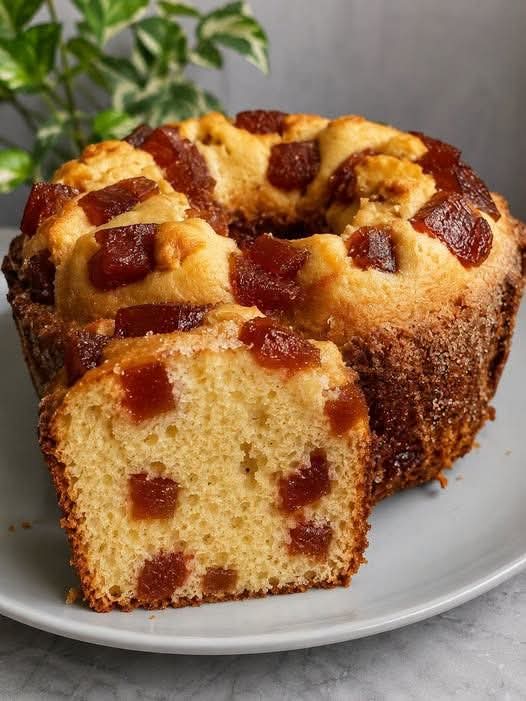
🍐 Matera Quince Cake
A Rustic Italian-Inspired Cake with Fragrant Quince & a Tender Golden Crumb
🌟 Introduction
Matera Quince Cake is a beautiful rustic dessert inspired by the traditional baking of Matera and the Basilicata region of southern Italy. Matera is famous for its ancient stone houses, rustic cuisine, and recipes built around simple ingredients. Cakes from this style of cooking are often uncomplicated, homemade, and deeply comforting.
This version combines a soft, lightly sweet vanilla cake with tender pieces of quince cooked until fragrant and golden. The quince provides a delicate floral, honey-like flavor and a pleasant contrast to the buttery-soft crumb.
It is perfect for afternoon tea, family gatherings, weekend baking, or simply enjoying with a cup of coffee.
📝 Ingredients
🍰 For the Cake
- 🌾 300 g self-rising flour
- 🍚 160 g granulated sugar
- 🥚 2 large eggs
- 🫒 50 ml vegetable oil
- 🥛 120 ml milk
- 🌼 1 teaspoon vanilla extract
- 🧂 Pinch of salt, optional
- 🍋 1 teaspoon finely grated lemon zest
- 🍐 1–2 medium quinces, about 350–450 g prepared weight
🍐 For the Quince Filling
- 350–400 g quince, peeled, cored, and diced
- 60 g granulated sugar
- 120 ml water
- 1 tablespoon lemon juice
- 1 teaspoon lemon zest
- ½ teaspoon ground cinnamon
- 1 teaspoon vanilla extract
✨ Optional Topping
- 1–2 tablespoons brown sugar
- A small handful of sliced almonds
- Powdered sugar, for dusting
- A little cinnamon
- Honey, for serving
🍐 Preparing the Quince
Quince is naturally firm and quite hard when raw, so it is best to cook it before adding it to the cake.
- Wash the quinces thoroughly.
- Peel them with a sharp vegetable peeler.
- Cut them into quarters.
- Remove the tough core and seeds.
- Cut the flesh into small cubes or thin slices.
- Immediately toss the quince with the lemon juice to help prevent browning.
Place the quince in a saucepan with the sugar, water, lemon zest, and cinnamon.
Bring the mixture to a gentle simmer over medium heat.
Cover and cook for approximately 15–25 minutes, stirring occasionally, until the quince becomes tender but still holds its shape.
Remove from the heat and stir in the vanilla.
Allow the quince to cool completely.
Important: Drain off excess liquid before adding the quince to the cake batter. You want the fruit moist but not dripping wet.
🥣 Making the Cake Batter
Step 1 — Prepare the Oven
Preheat your oven to:
175°C / 350°F
Grease a 22 cm round cake pan and line the bottom with parchment paper.
You can also use a 20 × 20 cm square baking pan for thicker slices.
Step 2 — Beat the Eggs and Sugar
Place the eggs and sugar into a large mixing bowl.
Whisk for approximately 2–3 minutes, until the mixture becomes lighter and slightly creamy.
You don’t need to whip it as intensely as a sponge cake. The goal is simply to incorporate some air.
Step 3 — Add the Wet Ingredients
Slowly whisk in:
- Vegetable oil
- Milk
- Vanilla extract
- Lemon zest
Mix until everything is smooth.
The vegetable oil gives this cake a wonderfully tender texture and helps it remain soft after cooling.
Step 4 — Add the Flour
Add the self-rising flour gradually.
Fold it into the wet mixture with a spatula or wooden spoon.
Do not overmix.
Stop as soon as there are no large streaks of dry flour remaining.
The finished batter should be thick but pourable.
🍐 Forming the Cake
Now comes the most delicious part.
Pour approximately half of the cake batter into the prepared pan.
Spread it gently into an even layer.
Arrange about half of the cooked quince over the batter.
Pour the remaining batter over the fruit.
Carefully spread the batter so that the quince is mostly covered.
Arrange the remaining quince pieces over the top.
Sprinkle with a little brown sugar and sliced almonds if desired.
This creates a beautiful rustic appearance while the quince slowly becomes caramelized during baking.
🔥 Baking Method
Place the cake in the center of the preheated oven.
Bake for approximately:
40–50 minutes
The exact baking time depends on your oven and the size of your pan.
The cake is ready when:
- The top is golden brown.
- The center feels gently firm when touched.
- A wooden skewer inserted into the cake comes out mostly clean.
- The edges begin pulling slightly away from the pan.
If the top is browning too quickly, loosely cover it with aluminum foil during the final 10–15 minutes.
❄️ Cooling
Remove the cake from the oven and allow it to cool in the pan for approximately 10–15 minutes.
Then carefully transfer it to a wire rack.
Allow it to cool for at least 30 minutes before slicing.
For the best texture, let it become completely cool before adding powdered sugar.
✨ Finishing Touch
Once cooled, dust the top generously with powdered sugar.
For an especially beautiful presentation, add:
- A light sprinkle of cinnamon
- Toasted sliced almonds
- Thin slices of poached quince
- A small drizzle of honey
Serve each slice with coffee, tea, or a spoonful of lightly whipped cream.
🍰 The Formation & Texture
The magic of this cake comes from the contrast between its simple batter and the cooked quince.
The self-rising flour provides the structure and gentle lift.
The eggs bind the ingredients together while contributing richness.
The milk keeps the crumb soft.
The vegetable oil creates tenderness and prevents the cake from becoming dry.
The sugar provides sweetness and helps the surface develop a golden crust.
The quince becomes soft, fragrant, and almost jam-like during baking.
As the cake cooks, the fruit releases some of its natural juices into the surrounding crumb, creating little pockets of moisture and flavor.
The result is a cake that is:
Golden on the outside → soft in the middle → fruity and fragrant throughout.
🏺 A Little History
Matera is one of Italy’s most distinctive historic cities, located in Basilicata, in the country’s south. Its cuisine reflects a long tradition of making satisfying food from modest, locally available ingredients.
Quince has been valued around the Mediterranean for centuries. Unlike many fruits that are eaten directly when ripe, quince is traditionally cooked because raw quince is exceptionally firm and astringent.
Cooking transforms it completely.
Its flesh becomes tender and fragrant, and its flavor develops notes reminiscent of apple, pear, honey, and flowers.
This makes quince particularly well suited to rustic cakes, tarts, preserves, and other traditional desserts.
This recipe follows that spirit: simple ingredients, careful preparation, seasonal fruit, and homemade comfort.
❤️ Why Cake Lovers Will Love It
This cake is ideal for people who love desserts that aren’t overwhelmingly sweet.
🍐 Quince Lovers
The quince becomes wonderfully soft and aromatic without disappearing completely into the cake.
🍰 Rustic Cake Lovers
There’s no complicated decoration required. Its natural golden top makes it beautiful.
☕ Coffee & Tea Lovers
A slice pairs wonderfully with espresso, cappuccino, black tea, or herbal tea.
👨👩👧👦 Family Bakers
The recipe is straightforward enough for a relaxed weekend baking project.
🍋 Citrus Lovers
The small amount of lemon zest brightens the quince and prevents the cake from tasting too heavy.
💡 Helpful Baking Methods & Tips
1. Don’t use raw quince directly
Raw quince is extremely firm. Pre-cooking gives the fruit the correct tenderness.
2. Don’t overmix the batter
Overmixing can make the finished cake heavier and tougher.
3. Drain the quince well
Too much cooking liquid can make the cake wet in the center.
4. Use room-temperature eggs and milk
They combine more easily and help create a smoother batter.
5. Watch the final baking stage
Because the fruit contains natural sugars, the top can brown faster than the center cooks.
6. Let the cake rest
The crumb becomes more stable and flavorful as it cools.
🍯 Delicious Serving Ideas
For an extra-special dessert, serve warm or room-temperature cake with one of these combinations:
Classic:
Powdered sugar + coffee
Creamy:
Whipped cream + cinnamon
Italian-inspired:
Mascarpone + honey
Warm dessert:
Vanilla ice cream + warm quince cake
Elegant:
Greek yogurt + honey + toasted almonds
Extra fruity:
A spoonful of quince preserves alongside each slice
📦 Storage
Store the completely cooled cake in an airtight container.
It can generally be kept at room temperature for about 1–2 days in a cool environment.
For longer storage, refrigerate it in a sealed container for up to 4 days.
Allow refrigerated slices to come toward room temperature before serving for the best texture.
The cake can also be frozen in individual slices. Wrap each slice well and freeze for up to approximately 2 months for best quality.
🌟 Final Conclusion
Matera Quince Cake is a wonderful example of how a handful of simple ingredients can become something genuinely special.
The tender vanilla cake provides a soft foundation, while the cooked quince brings floral sweetness, gentle acidity, and a beautiful rustic character. Lemon zest keeps everything bright, while cinnamon adds warmth.
It’s not a complicated celebration cake—and that’s precisely its charm.
It is the kind of dessert that belongs on a family table: simple, fragrant, comforting, homemade, and made to be shared.
Slice it generously, dust it with powdered sugar, pour yourself a cup of coffee, and enjoy a little taste of rustic southern Italian-inspired baking. 🍐🍰☕❤️