Introduction
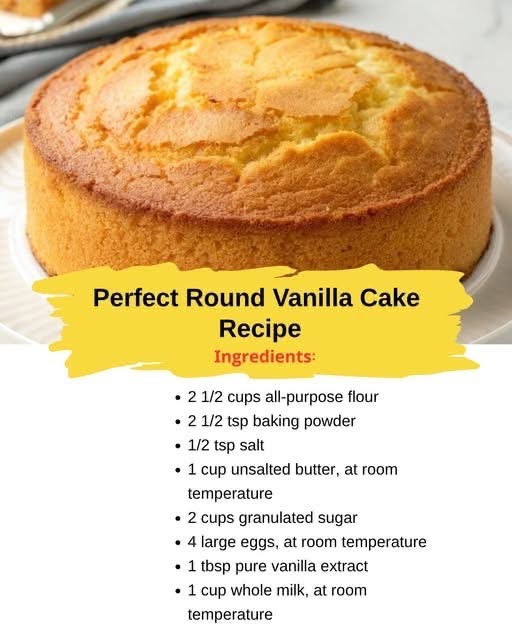
There’s something undeniably comforting and celebratory about a classic vanilla cake. Its delicate flavor, tender crumb, and beautiful golden-brown crust make it a timeless dessert perfect for any occasion, from simple family gatherings to grand celebrations. But beyond just taste, the visual appeal of a perfectly round, evenly baked vanilla cake is a joy to behold. This recipe isn’t just about delicious flavor; it’s about achieving that ideal form, a cake that looks as good as it tastes.
Imagine slicing into a cake with uniform layers, each bite offering that quintessential vanilla essence. This “Perfect Round Vanilla Cake Recipe” is meticulously crafted to guide you through every step, ensuring your cake emerges from the oven beautifully domed, perfectly golden, and ready to be the star of your dessert table. We’ll delve into the secrets of achieving that coveted round shape and a consistently tender texture that will have everyone asking for a second slice.
Whether you’re a seasoned baker or just starting your culinary journey, this recipe provides clear, actionable steps to master the art of vanilla cake. We’ll cover everything from selecting the right ingredients to mastering crucial baking techniques, guaranteeing a show-stopping result every single time. Get ready to bake a cake that’s not only incredibly delicious but also a true visual masterpiece, perfect for pairing with a luscious buttercream, fresh berries, or a simple dusting of powdered sugar.
Nutritional Information
Per serving (approximate values, based on 12 servings):
- Calories: 350
- Protein: 4g
- Carbohydrates: 48g
- Fat: 16g
- Fiber: 1g
- Sodium: 250mg
Ingredients
- 2 ½ cups (300g) all-purpose flour, sifted
- 1 ½ cups (300g) granulated sugar
- 1 tablespoon baking powder
- ½ teaspoon salt
- 1 cup (226g) unsalted butter, softened to room temperature
- 4 large eggs, at room temperature
- 1 cup (240ml) whole milk, at room temperature
- 2 teaspoons pure vanilla extract (high-quality recommended)
Instructions
- Prepare Your Pans: Preheat your oven to 350°F (175°C). Grease and flour two 8-inch round cake pans. For an even easier release and perfectly flat bottoms, line the bottom of each pan with a circle of parchment paper, then grease and flour the parchment as well.
- Combine Dry Ingredients: In a large bowl, whisk together the sifted all-purpose flour, granulated sugar, baking powder, and salt. Make sure there are no lumps and the ingredients are thoroughly combined.
- Cream Butter and Sugar: In a separate large bowl, using an electric mixer on medium speed, beat the softened unsalted butter until light and fluffy, about 2-3 minutes. Gradually add the granulated sugar to the butter, beating on medium-high speed for another 3-5 minutes, until the mixture is very pale and fluffy. This creaming step incorporates air, which is crucial for a light cake.
- Add Eggs: Add the eggs one at a time, beating well after each addition. Scrape down the sides of the bowl as needed to ensure everything is incorporated. The mixture might look slightly curdled at this stage, but don’t worry, it will come together.
- Combine Wet Ingredients: In a small bowl or measuring cup, whisk together the whole milk and pure vanilla extract.
- Alternate Dry and Wet Ingredients:With the mixer on low speed, gradually add about one-third of the dry ingredients to the butter mixture, mixing until just combined. Then, add half of the milk mixture, mixing until just combined. Repeat with another third of the dry ingredients, then the remaining milk mixture, and finally the last third of the dry ingredients. Mix only until just combined and no streaks of flour remain. Be careful not to overmix, as this can lead to a tough cake. The batter should be smooth and pale yellow.
- Divide and Bake: Divide the batter evenly between the two prepared cake pans. You can use a kitchen scale for precision to ensure perfectly level cakes. Smooth the top of the batter with a spatula.
- Bake: Bake for 28-35 minutes, or until a wooden skewer or toothpick inserted into the center of the cakes comes out clean. The cakes should be golden brown around the edges and spring back lightly when touched.
- Cool in Pans: Remove the cakes from the oven and let them cool in their pans on a wire rack for 10-15 minutes. This allows them to firm up slightly before being removed.
- Invert and Cool Completely: After 10-15 minutes, carefully invert the cakes onto a wire rack, remove the pans, and peel off the parchment paper. Let the cakes cool completely on the wire rack before frosting, typically 1-2 hours. Frosting a warm cake will cause the frosting to melt.
Cooking Tips and Variations
Tips for the Perfect Round Cake:
- Room Temperature Ingredients: This is paramount! Cold ingredients don’t emulsify properly, leading to a lumpy batter and a less tender cake. Ensure your butter, eggs, and milk are all at room temperature before you begin.
- Don’t Overmix: Once you add the flour, mix only until just combined. Overmixing develops the gluten in the flour, resulting in a tough, dry cake.
- Accurate Oven Temperature: Use an oven thermometer to verify your oven’s temperature. Many ovens run hot or cold, which can significantly impact baking time and cake texture.
- Even Batter Distribution: For consistently round and level cakes, use a kitchen scale to divide the batter equally between your cake pans.
- Pan Preparation: Always grease and flour your pans thoroughly. For extra insurance, line the bottom with parchment paper. This prevents sticking and makes release much easier, preserving the cake’s shape.
- Cool Completely: Resist the urge to frost warm cakes. A warm cake will melt your frosting and cause it to slide right off.
Variations to Elevate Your Vanilla Cake:
- Lemon Zest Infusion: Add 1-2 tablespoons of finely grated lemon zest to the dry ingredients for a bright, citrusy twist.
- Almond Extract: Replace ½ teaspoon of vanilla extract with ½ teaspoon of almond extract for a subtle, nutty flavor.
- Sprinkle Funfetti: Fold in ½ cup of rainbow sprinkles (nonpareils work best) into the batter just before dividing into pans for a festive “funfetti” cake.
- Chocolate Chip Delight: Gently fold in ¾ cup of mini chocolate chips into the batter for a delightful surprise in every bite.
- Coffee Enhancement: Add 1 teaspoon of instant espresso powder (dissolved in 1 tablespoon of hot water, then cooled) to the wet ingredients for a richer, deeper flavor that complements vanilla beautifully.
Frosting Suggestions:
- Classic Vanilla Buttercream: The perfect pairing for this cake.
- Rich Chocolate Ganache: A decadent contrast to the light vanilla flavor.
- Tangy Cream Cheese Frosting: Adds a delightful tang and creamy texture.
- Fresh Berry Compote: A lighter option, especially good for summer.
Storage and Reheating
At Room Temperature:
- If unfrosted, wrap individual cake layers tightly in plastic wrap to prevent drying out. They will stay fresh for up to 2 days.
- If frosted, store the cake under a cake dome or in an airtight container. It will stay fresh for 3-4 days.
In the Refrigerator:
- For frosted cakes, refrigeration can extend their freshness, especially in warmer climates or if your frosting contains dairy that requires chilling. Store in an airtight container or under a cake dome. It will last for up to 5-7 days.
- Bring refrigerated cake to room temperature for about 30-60 minutes before serving for the best flavor and texture.
In the Freezer:
- Unfrosted Cake Layers: Once completely cooled, wrap each cake layer individually and tightly in plastic wrap, then wrap again in aluminum foil. Freeze for up to 3 months.
- Frosted Cake: For best results, freeze the cake unwrapped until the frosting is firm (about 1-2 hours). Then, wrap the entire cake tightly in plastic wrap, followed by a layer of aluminum foil. Freeze for up to 1-2 months.
- Thawing Frozen Cake: Transfer the frozen cake (still wrapped) to the refrigerator overnight to thaw. For individual slices, you can thaw them at room temperature for a shorter period.
Frequently Asked Questions
Why did my cake sink in the middle?
A sinking cake can be caused by several factors, including opening the oven door too early during baking, underbaking the cake, using too much leavening agent (baking powder), or the oven temperature being too low. Ensure your oven temperature is accurate with an oven thermometer and avoid opening the oven door until at least two-thirds of the way through the baking time.
Can I make this recipe into cupcakes?
Yes, absolutely! This recipe works wonderfully for cupcakes. Line a muffin tin with cupcake liners and fill each about two-thirds full with batter. Bake at 350°F (175°C) for approximately 18-22 minutes, or until a toothpick inserted into the center comes out clean. This recipe should yield about 24 standard-sized cupcakes.
What is the best way to level my cake layers?
To achieve perfectly level cake layers for stacking, ensure your cakes are completely cool. You can use a serrated knife, a cake leveler, or even a long piece of dental floss. Place the cake on a flat surface, and carefully saw through the top dome to create a flat surface. This step is optional but makes for a more professional-looking finished cake.
My cake came out dry. What went wrong?
A dry cake is typically a result of overbaking or overmixing the batter. Overbaking causes too much moisture to evaporate, while overmixing develops gluten, leading to a tough, dry texture. Make sure to bake only until a toothpick comes out clean and mix the batter only until the ingredients are just combined. Using room temperature ingredients also helps achieve a moist crumb.