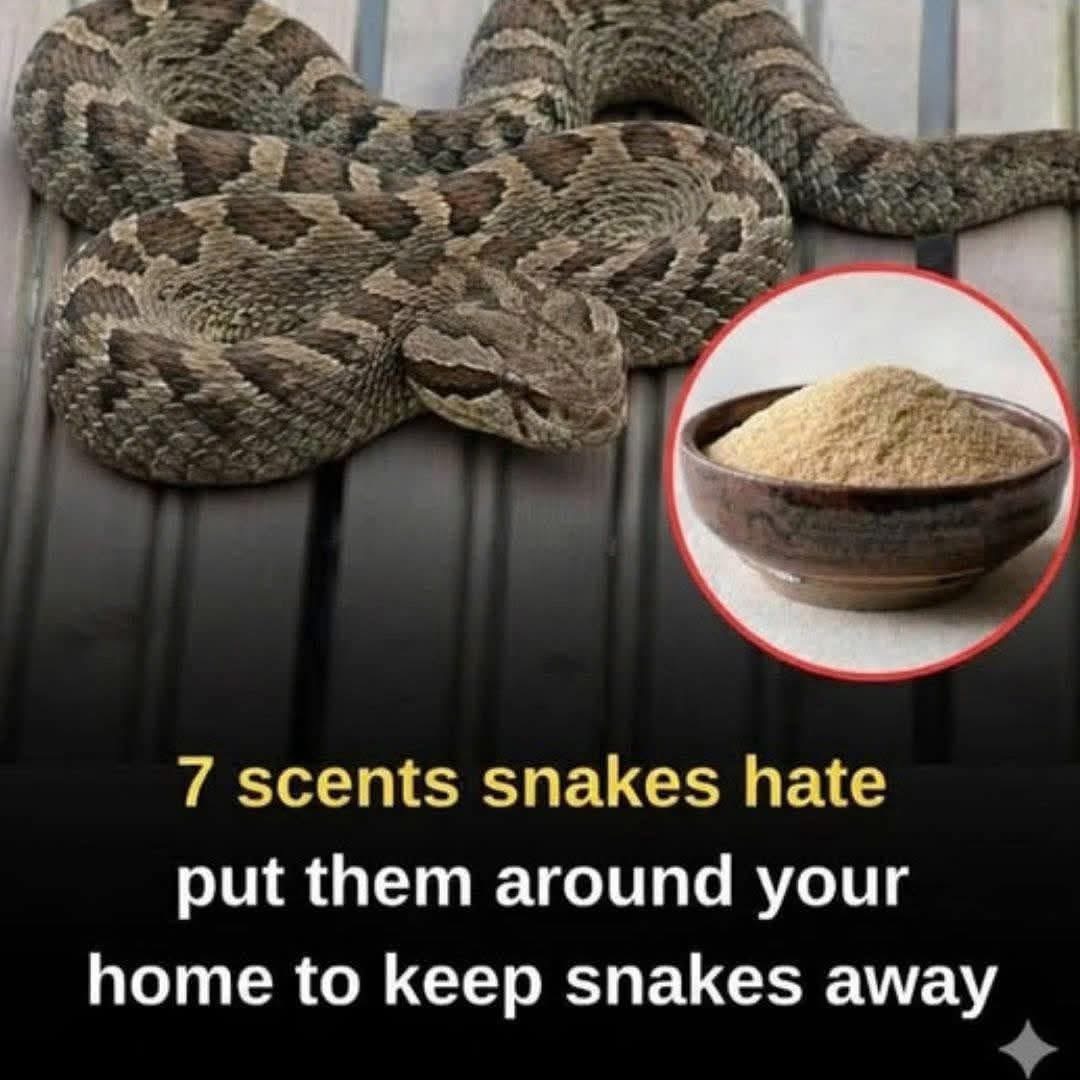
While snakes play an important role in ecosystems (controlling rodents, for example), most people prefer they stay outside the yard—or better yet, far from the house. The good news? Snakes rely heavily on their sense of smell, and certain strong scents can deter them naturally—without harming them or your pets.Here are 7 smells snakes dislike, backed by wildlife experts and pest control professionals, plus safe, humane ways to use them:

1. AmmoniaWhy it works: Snakes associate the sharp odor of ammonia with predator urine (like foxes or coyotes)—a danger signal.How to use:Soak rags in diluted ammonia (1 part ammonia : 2 parts water).Place near entry points: basement windows, garage doors, woodpiles, or garden sheds.Reapply every 2–3 days or after rain.

Caution: Don’t pour directly on soil—it can harm plants and beneficial insects.

2. Garlic & OnionsWhy it works: Sulfur compounds in garlic and onions create a pungent odor that overwhelms a snake’s sensitive olfactory system.How to use:Blend 10 cloves garlic + 4 onions + 4 cups water; strain and spray around perimeter.Or plant garlic/onion bulbs around garden beds as a natural barrier.Reapply weekly or after rain.

3. Marigolds
Why it works: These bright flowers emit a strong, musky scent (from pyrethrum) that repels not just snakes but also insects they feed on.How to use:Plant marigolds around your home’s foundation, garden edges, or chicken coops.Works best as a preventive long-term strategy.

4. Cinnamon & Clove OilWhy it works: Essential oils like cinnamon and clove contain eugenol and cinnamaldehyde—compounds that irritate snakes’ sensory organs.How to use:Mix 10 drops cinnamon oil + 10 drops clove oil + 1 cup water + 1 tsp dish soap (helps it stick).Spray along fences, decks, and crawl spaces.Reapply every 3–4 days.

Pet-safe? Use sparingly if you have cats (essential oils can be toxic to felines).

5. VinegarWhy it works: The strong acidic smell is unpleasant to snakes—especially effective near water sources (ponds, pools, drainage ditches).How to use:Pour undiluted white vinegar around the edges of ponds or moist areas.Reapply after rain or every few days.

Note: Less effective on dry land—but great for wet zones.
6. Lemongrass & CitronellaWhy it works: The citrusy, herbal aroma masks rodent scents (snake attractants) and irritates snakes’ senses.How to use:Plant lemongrass in pots near doorways or patios.Or use citronella oil in a diffuser outdoors (not indoors—can irritate pets).

7. Sulfur (Use with Caution!)Why it works: Powdered sulfur creates an irritating barrier snakes won’t cross.How to use:Sprinkle flowers of sulfur around perimeter, sheds, or burrows.
Warning:Can irritate skin/lungs—wear gloves and mask.Not pet- or child-friendly.Banned in some areas—check local regulations first.

What Doesn’t Work (Myths Debunked)Mothballs: Toxic, illegal for outdoor use, and ineffective.Human hair: No scientific backing.Fake owls: Snakes quickly learn they’re not real.

The Best Defense? Habitat ModificationSmells help—but removing attractants is key:Eliminate rodent populations (snakes follow food).Keep grass short and remove wood/rock piles near the house.Seal cracks in foundations, garages, and crawl spaces.Install tight-fitting screens on vents.

Final ThoughtMost snakes are shy, non-venomous, and avoid humans. These deterrents encourage them to move on—humanely and safely. If you live in an area with venomous species (like rattlesnakes or copperheads), combine scent deterrents with professional exclusion methods.Respect wildlife—but protect your peace.
